
It began with a sad cut of beef. At least that’s the story. The year was 1975 and Ohio rancher Harold Etling was unhappy with his steak dinner. As he put down his knife and fork, he realized things needed to change.
The problem, in Etling’s opinion, had to do with labels. At the time, the USDA grading scale was, in descending order, Prime, Choice, and Good (now known as Select). The grades were based on the marbling of the meat, with the general theory being that the more marbling — or fat — within a cut, the better it would taste and the easier it would be to chew. But what the USDA had done prior to Etling’s meal was to shift the line between Choice and Good, reducing the amount of marbling required for a cut to qualify as Choice and resulting in more beef — and in Etling’s opinion, lesser beef — falling into the Choice category.
check out our premium collection
The USDA’s position was that the reduced marbling requirement did not noticeably affect the flavor or quality of the meat, actually improved the consistency of the grades, and would serve to encourage the general public to eat leaner, and therefore healthier, cuts of beef. Opponents argued that lean beef needed its own designation that would similarly ensure quality and flavor, and not simply reflect a lesser amount of fat.
The Midnight Troubadour
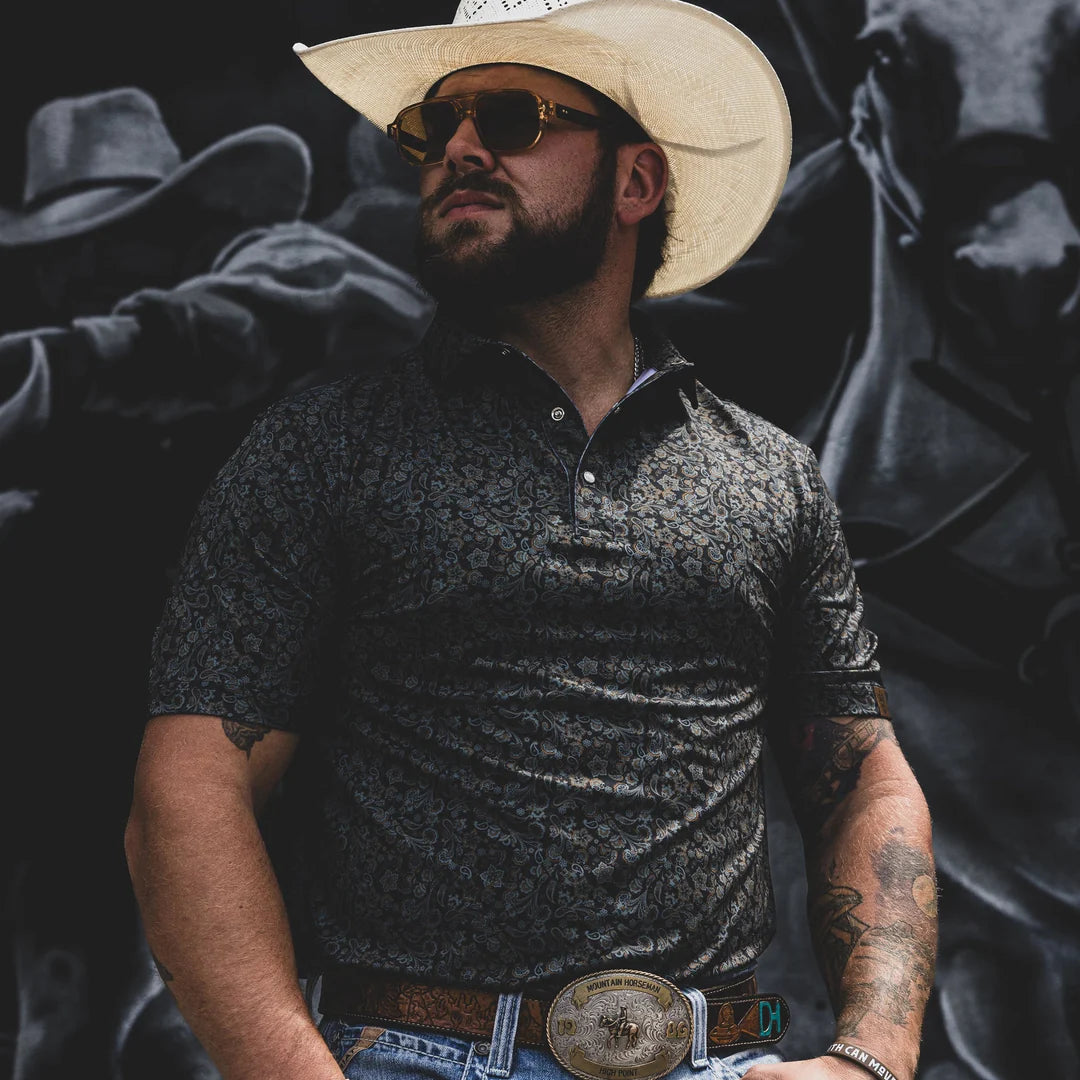
Tough and timeless, this polo is built for the long ride. Featuring a crisp, non-collapsing collar and a rugged, stretchy fabric, it's the perfect shirt for any cowboy's wardrobe.
In light of the USDA’s new grading system, Etling decided he was not going to take his flavorless steak sitting down. He saw an opportunity to capitalize on the grading confusion and helped organize a network of ranchers to approach the American Angus Association. The organization, whose mission is to boost dependable, first-rate Angus production for consumer benefit, seized the opportunity to establish its own standards for the optimal cut. They called their self-determined endeavor Certified Angus Beef.
“It was the perfect storm for creating this demand for product,” says Jeffrey W. Savell, leader of the Department of Animal Science’s meat science section at Texas A&M University in College Station. “They had the ability to give you this product that you wanted that was more like something from the past. If the grade change had gone in the other direction, the industry would have never had the need to create such a category as Certified Angus Beef.”
The celebratory nature of steak primed it for the upgrade. “It’s the trip to the steakhouse. It’s Mother’s Day. It’s Father’s Day. It’s the promotion. It’s the birthday,” Savell says. “People celebrate and they celebrate with beef. So that helps drive the higher quality, the higher price product, because that’s what you’ll celebrate with. If you’re going to go for a celebration, you want it to be good.”
Together with Dr. Bob VanStavern, a now-retired meat scientist from The Ohio State University, the ranchers and the American Angus Association crafted the rigorous requirements that would become the foundation of the Certified Angus Beef brand, gaining approval and third-party verification from the USDA in 1977. These criteria for marbling, maturity, and consistency were specifically selected to benefit the consumer by prioritizing the meat’s flavor and tenderness. The goal was to ensure that the experience of eating a well-prepared steak would always be excellent — something Etling’s steak was not.
The new brand was launched January 1, 1978, out of West Salem, Ohio, as an association-funded pilot program linking producers and consumers to high-quality protein. Fellow Angus rancher Mick Colvin was at the brand’s helm when the first pound of Certified Angus Beef was sold at a supermarket in Columbus in October 1978. The organization’s headquarters were moved half an hour south to Wooster in 1994, followed by the addition of an education and culinary center that hosts hands-on training with chefs and meat cutters from around the country.
The organization keeps track of what is going on in the field by dispatching supply development experts — staff with training in genetics, animal nutrition, growth and development, and health management — across the country to help ranchers maximize their product and monitor progress on the ground.
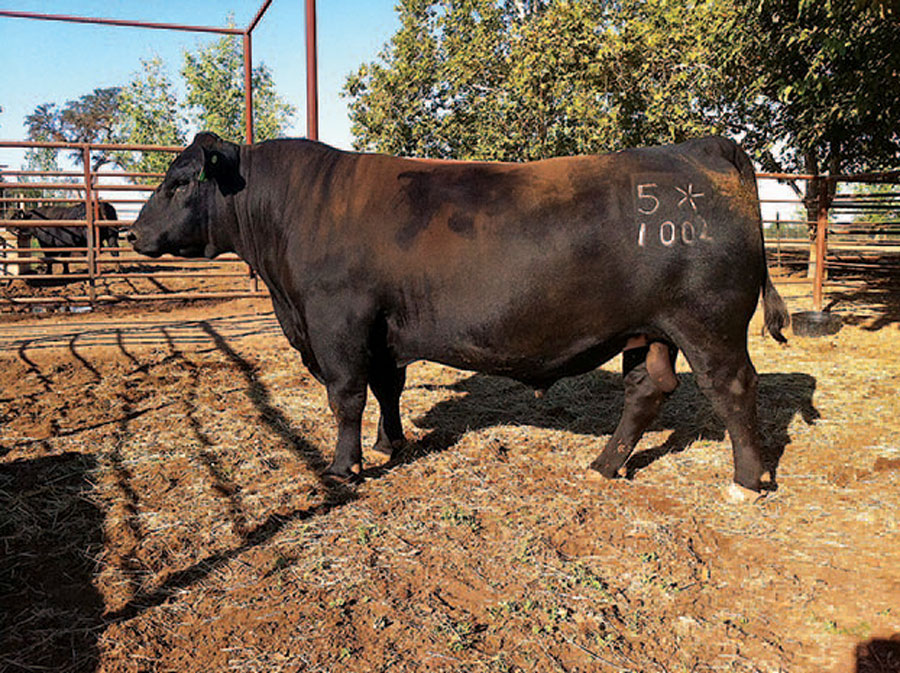
“This team has developed tools and resource materials for cattlemen to use, including our Best Practices manual for cattle production,” explains Mark McCully, the brand’s vice-president of supply development. “Team members work directly with cattlemen on their farms and ranches to provide consulting and advice to improve the quality of their cattle.” This assistance extends throughout the cycle, all the way through to finishing at the feedlot. In fact, Certified Angus Beef offers a licensing program for feedlots in order to educate managers about what factors optimize Certified Angus Beef certification. If all goes well, independent USDA graders will award the brand.
As McCully notes, “the Angus breed is well-known for providing superior marbling, flavor, and tenderness,” which makes it a natural choice for a premium brand. Like all Angus beef, Certified Angus Beef must be at least 51 percent black hide, a USDA criterion for the other 100 Angus beef programs, which includes Wal-Mart Angus. Only one in four Angus cattle receives the Certified Angus Beef brand, and even then only 1.5 percent of all beef is graded Certified Angus Beef Prime, which is limited to young, well-fed beef cattle with abundant marbling. The remaining Certified Angus Beef product is designated as Choice.
This livestock comes from 25,000 Certified Angus Beef rancher members, out of 687,540 USDA-classified beef cattle farms, all striving for the prized status that will help their products make it to the white tablecloths of high-end restaurants. As McCully likes to say, for the Certified Angus Beef brand, the whole process is “essentially ‘gate to plate.’ ”
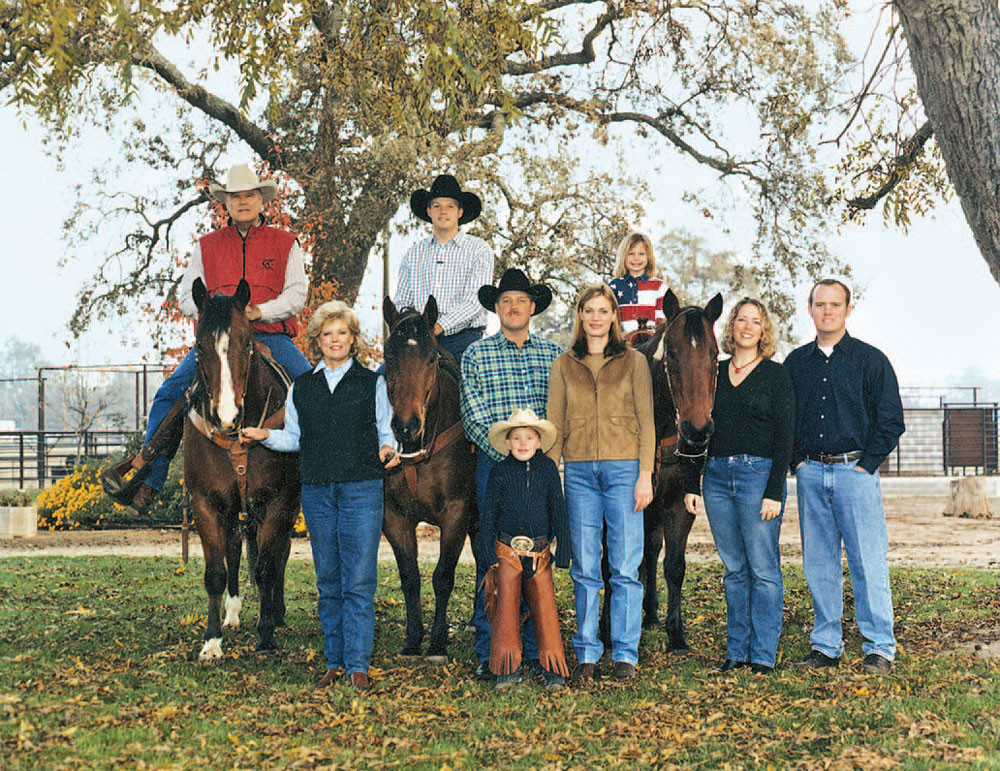
Abbie and Mark Nelson and their family, who own Five Star Land & Livestock in Wilton, California, know all too well that it takes die-hard commitment and generations of experience to raise cattle that qualify as Certified Angus Beef. Their story begins in the early 1900s with Abbie’s great-grandfather Thomas Ryan, a cattle buyer in Iowa who imported Scottish cattle. His son, Earl, followed him into the cattle business. The younger Ryan formed a partnership with his banker brother-in-law, Charles Escher, and the relationship proved auspicious.
The pair purchased the W.A. McHenry herd from Denison, Iowa, and with it the bull Earl Marshall. Today, more than 92 percent of Angus pedigrees trace back to Earl Marshall, Abbie Nelson says. “He wasn’t the best of the three or four they got of the young herd bulls included in the sale, but my grandfather said, ‘No way are we selling him. He’ll be the greatest sire of our time.’ He went on to sire more international champions than any other bull.” Bar Marshall and Quality Marshall are just two of those winning sires.
During the Great Depression, Ryan moved his family and cattle to California to be closer to a new partner, H.O. Harrison, in San Francisco. “They did it as a means of existence,” Nelson says. “It was a way of staying alive while maintaining a quality herd during the Depression.”
Ultimately, the family decided to pursue the Certified Angus Beef brand. Retaining it requires talent and the ability to keep up with “everything that’s available,” explains Nelson, the first woman on the American Angus Association board of directors (1997 – 2003) and former president of the Angus Foundation, a nonprofit organization that funds genetics research and youth education programs.
“We use any information passed out by the Certified Angus Beef team of experts as a resource,” she says. “The support maximizes the value of the cattle. We then share that knowledge with our bull customers, who in turn receive higher premiu
Source: https://www.cowboysindians.com/2014/07/branding-beef/
