
We may earn revenue from the products available on this page and participate in affiliate programs. Learn More ›
Knowing how to tie a knot has always been one of those key outdoor skills that the inexperienced take for granted. The experienced outdoorsman, however, has had enough success and failure to know that there are right and wrong knots for certain jobs.
But first, it helps to know a few strange terms. Put it simply, a knot is some kind of fastening or splice made by intertwining one or more ropes or some other flexible material. After tightening a knot, it should hold on its own. A hitch is a little bit different. It’s like a knot, but it generally involves another object like a stick, a post, a ring, or occasionally another rope. Properly tied, hitches can hold their place, or they may be able to slide, depending on the hitch you choose. A lashing is like a hitch, but slightly more complex. Lashings involve the use of a rope or similar material to secure two or more objects together. To grossly oversimplify all this, the knot is just rope fastened together; the hitch is a rope fastened to an object; and a lashing is a rope fastening multiple objects together.
A good knot can save lives when you’re dealing with a survival situation, performing first aid, and when working over heights or water. But, you have to know how to tie it. So make sure you know what to do with your rope the next time you head into the wild by learning these 20 essential knots.
1. The Square Knot

The square knot is a classic for connecting lines and tying knots. Whether you are tying two ropes together to make a longer rope, or you are tying up a bundle of firewood to carry, the square knot is a winner. It’s much more secure and stable than its cousin the granny knot, which everyone is probably familiar with as part of tying their shoes.
How to Tie a Square Knot:
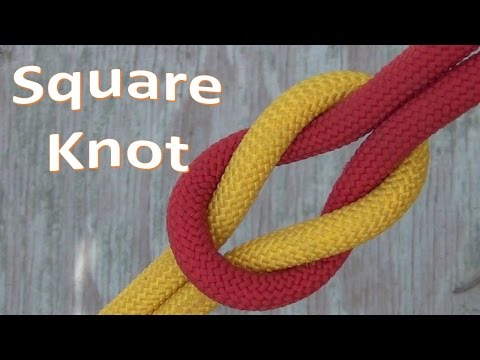
1. You can tie a solid square knot by lapping one rope right over left, then underneath the other, and then tying the same again in the reverse direction—left over right and then underneath.
2. You’ll know you did it right when the working end and standing end of each rope is side by side (not making a “cross” like a granny knot). Read our full guide on how to tie a square knot, here.
2. The Clove Hitch
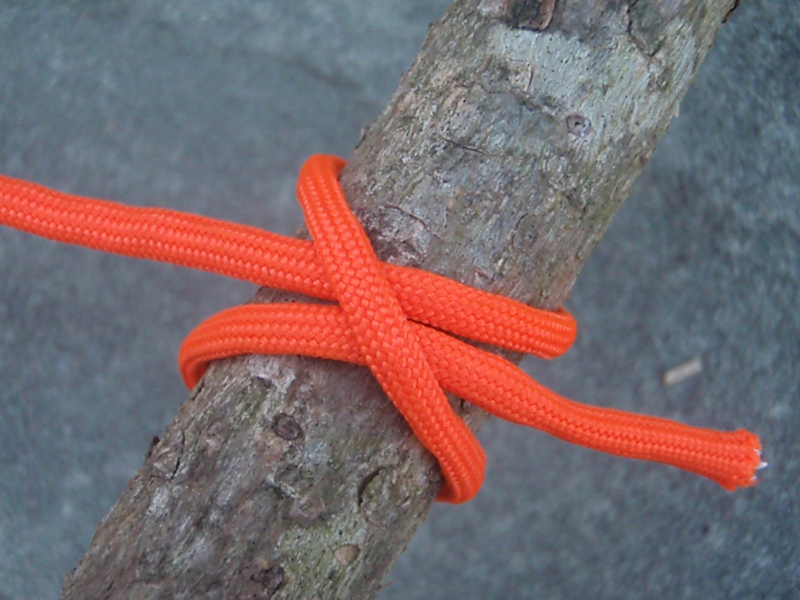
The clove hitch is an old tie with many outdoor uses. This ancient connection has been used successfully by people since the early 1500s, as shown in old paintings. Today’s uses for the clove hitch cover a wide range of activities, especially for boaters, campers and for use with outdoor vehicles.
Its primary benefit is for securing a line to a round object or anchor, like a line from a tree limb to a camp lantern, or when hanging a boat fender from a boat railing. It also can be adjusted easily to lengthen or shorten a line as needed. It can be adjusted from either line ends of the hitch.
Tent support poles, fence posts, and trees are all serviceable anchors for a line tied with a clove hitch. The knot is used by outdoorsmen securing lines to truck or ATV railings and rings.
The Midnight Troubadour

Tough and timeless, this polo is built for the long ride. Featuring a crisp, non-collapsing collar and a rugged, stretchy fabric, it's the perfect shirt for any cowboy's wardrobe.
While a clove hitch can be tied to a square or odd-shaped railing or post, it’s most useful and secure when drawn tight around a rounded pole, post, railing, even a push pole when a boat line is tethered to it for anchoring a skiff in shallow water.
A clove hitch may slip a bit when under heavy load with stout lines. So, tyi
