
Invasive species live among us as unwelcome guests surviving and thriving at the expense of healthy ecosystems. The deadly Africanized honeybee, kudzu, and the zebra mussel are among the better-known violators. However, the insidious troublemakers include a wide variety of organisms: plants, animals, fish, mollusks, insects — even single-cell, disease-causing microbes — that seem to have always been with us.
“It’s nothing new and isn’t a ‘the sky is falling’ issue,” says Liz Galli-Noble, director of the Center for Invasive Species Management at Montana State University in Bozeman. “Invasive species are a long-term, multimillion-dollar management issue that’s not going away in western North America.”
check out our premium collection
These invasive species have become an even bigger threat to biodiversity than habitat destruction. “Invading alien species in the United States cause major environmental damages and losses adding up to almost $120 billion per year,” states lead author David Pimentel, an emeritus faculty member at Cornell University, in the 2005 article “Update on the Environmental and Economic Costs Associated with Alien-Invasive Species in the United States.”
The Midnight Troubadour

Tough and timeless, this polo is built for the long ride. Featuring a crisp, non-collapsing collar and a rugged, stretchy fabric, it's the perfect shirt for any cowboy's wardrobe.
He and his coauthors go on to point out that there are approximately 50,000 foreign species in the United States, and their numbers are on the rise. These invasive species are a leading cause of animal population decline and extinction worldwide, putting close to 42 percent of the species on threatened or endangered lists at risk. They can also negatively affect property values, agricultural productivity, public utility operations, native fisheries, tourism, and outdoor recreation.
Despite the magnitude of the problem, invasive species are generally not at the top of the public’s environmental concern agenda. “Invasive species aren’t a sexy issue,” notes Bob Wiltshire, executive director and founder of the nonprofit Invasive Species Action Network. Which is why education has become a top priority.
According to Montana State University’s Galli-Noble, target demographics for educational outreach include private landowners, gardeners, and sportsmen. “I don’t know anybody who doesn’t hunt, fish, or recreate, or has a family member or friend who doesn’t. We know people care about healthy ecosystems. They also want to leave those traditions and landscapes for their children — it’s generational. The key is making the public aware of the problem and getting them engaged in activities that promote prevention — which is also highly cost-effective.”
Do No Harm
So where do we start? In 1999, President Bill Clinton signed an executive order establishing the National Invasive Species Council and defining the terminology needed to begin a nationwide discussion of the problem. The order defined invasive species as any non-native species whose introduction harms or is likely to harm the economy, the environment, or human, animal, or plant health.
Although the terms introduced, alien, exotic, nonindigenous, and non-native are also sometimes used in conjunction with invasive species, not all introduced or non-native species become invasive. In fact, we highly value a number of non-native species: horses, cattle, pigs, sugar cane, and potatoes, to name several. Some don’t become invasive until they escape cultivation or are introduced into favorable environmental conditions that result in a rapid, dangerous proliferation without natural predators, diseases, or competitors. A non-native species subsequently becomes invasive when it disrupts the food chain and alters the delicate balance of nature for fish and wildlife.
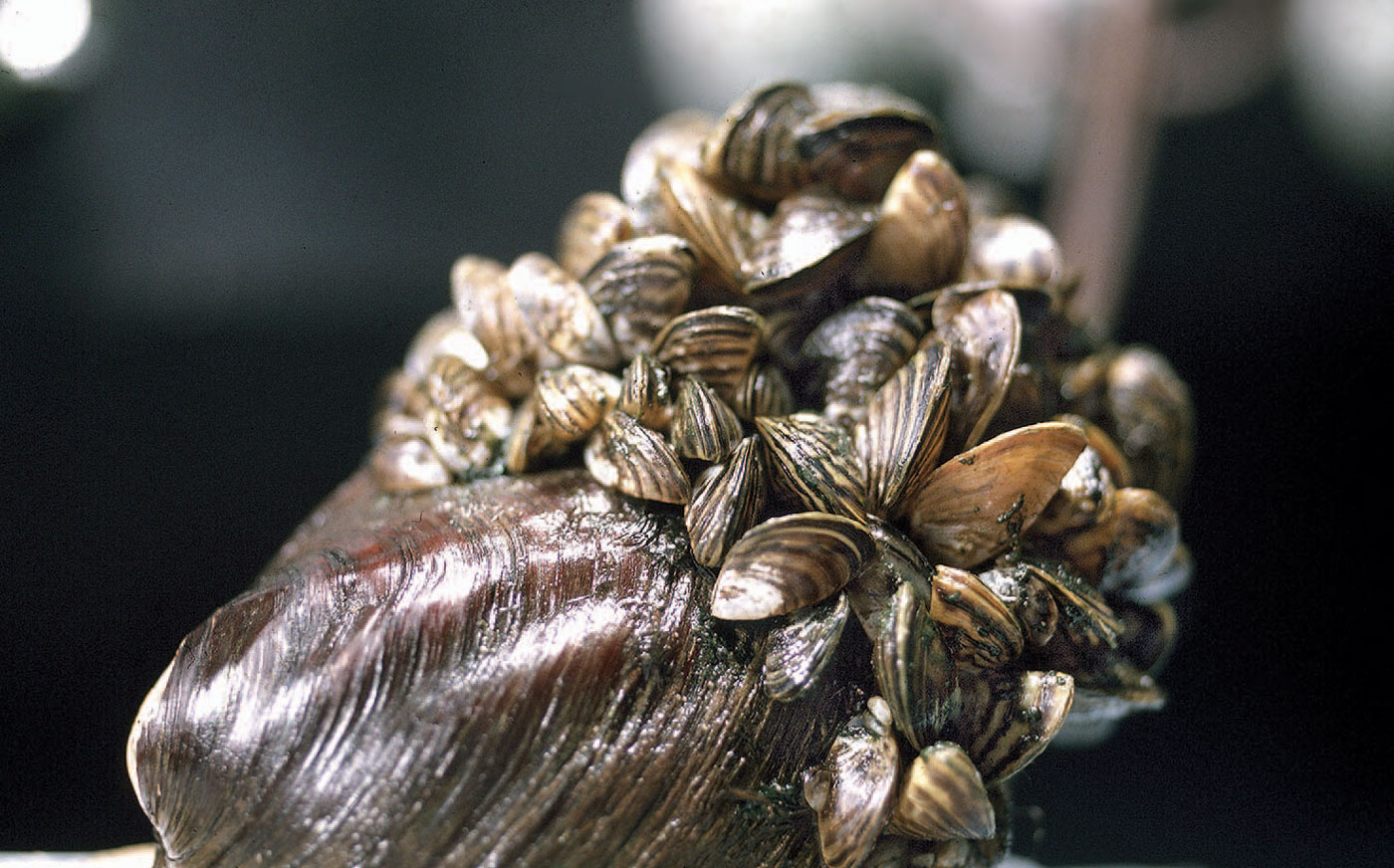
“Invasive species don’t respect our state or national borders,” says Galli-Noble. A prime example is that since their discovery in Lake St. Clair, Michigan, in 1988, the voracious zebra mussel, native to Eastern Europe, is now found in 20 U.S. states. The mollusk eats and reproduces at an alarming rate, attaching to piers, pilings, ladders, and boats and their mechanical systems, and blocking water supplies. Its equally reprehensible cousin, the quagga mussel, was found in the Great Lakes several years later.
But western states weren’t so concerned until 2007, when quagga mussels were found in Lake Mead — America’s largest reservoir, near Las Vegas. California, Arizona, Colorado, and Utah have since detected them in critical water supply systems. Because no known method of eradicating quagga mussels exists, states are focusing on minimizing impacts.
Montana, Wyoming, and Idaho conduct mandatory, aggressive watercraft inspections and invasive mussel-prevention programs. Inspectors in Montana have already found dead quagga mussels on two boats.
In Idaho, calcium and water temperature levels have attracted mussel colonies, and so far 90 “critical” and “high-risk” bodies of water have been identified statewide. This infestation comes with a hefty price. It’s thought that introduced mussels could cost Idaho $100 million annually in damages to infrastructure, facilities, agriculture, and recreation.
But it’s not just about the West’s waterways. With 246 million acres of federal public land in the western United States and Alaska, the Bureau of Land Management (BLM) counts more than 35 million acres infested with invasive plants. Twenty-five million of those are overrun with non-native invasive grasses, says Gina Ramos, BLM senior weeds specialist.
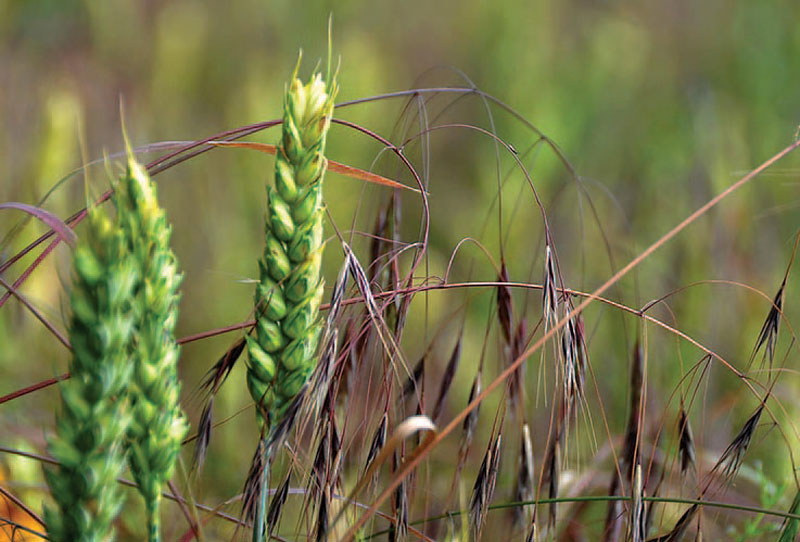
One of the biggest problems on western rangelands is cheatgrass, also known as Downy brome, which thrives across the Great Basin in Nevada, Utah, and parts of Idaho. Another non-native grass, Medusahead, is also on the move.
These quick-spreading grassland invaders reduce rangeland health and soil productivity, says Ramos. “They destroy native habitat for livestock and wildlife — even pollinators like butterflies are forced to move on to other resources.”
The head of Utah’s Department of Natural Resources, Mike Styler, told The New York Times in July 2012 that cheatgrass has “changed the entire ecology of the West,” in part because the easy burner may cause four times more fires than other types of ground cover, and it grows back quickly.
Scientists hope that biological control — using other organisms like black finger fungus to control a species — may someday bring cheatgrass to its knees.
Natives And Non-Natives
Between the cheatgrass on earth and the mussels in the water is the wetland invader. One such example is flowering rush, now living in Montana’s Flathead Lake. “It forms monotypic stands [of a single species versus many species] that restrict shoreline access to the water,” says Virgil Dupuis, extension director of Salish Kootenai College on the Flathead Indian Reservation in western Montana. “The root is considered edible, but we’re not going to eat our way out of this problem.”
Admitting that they haven’t found an effective control for flowering rush, he says tribal people are less willing to embrace chemical controls like herbicides. However, they do use them.
“We try to be as careful as we can,” explains Dupuis. “Nobody likes using those things, and some people are dead set against it.” To do so requ
Source: https://www.cowboysindians.com/2013/05/species-invaders/
