
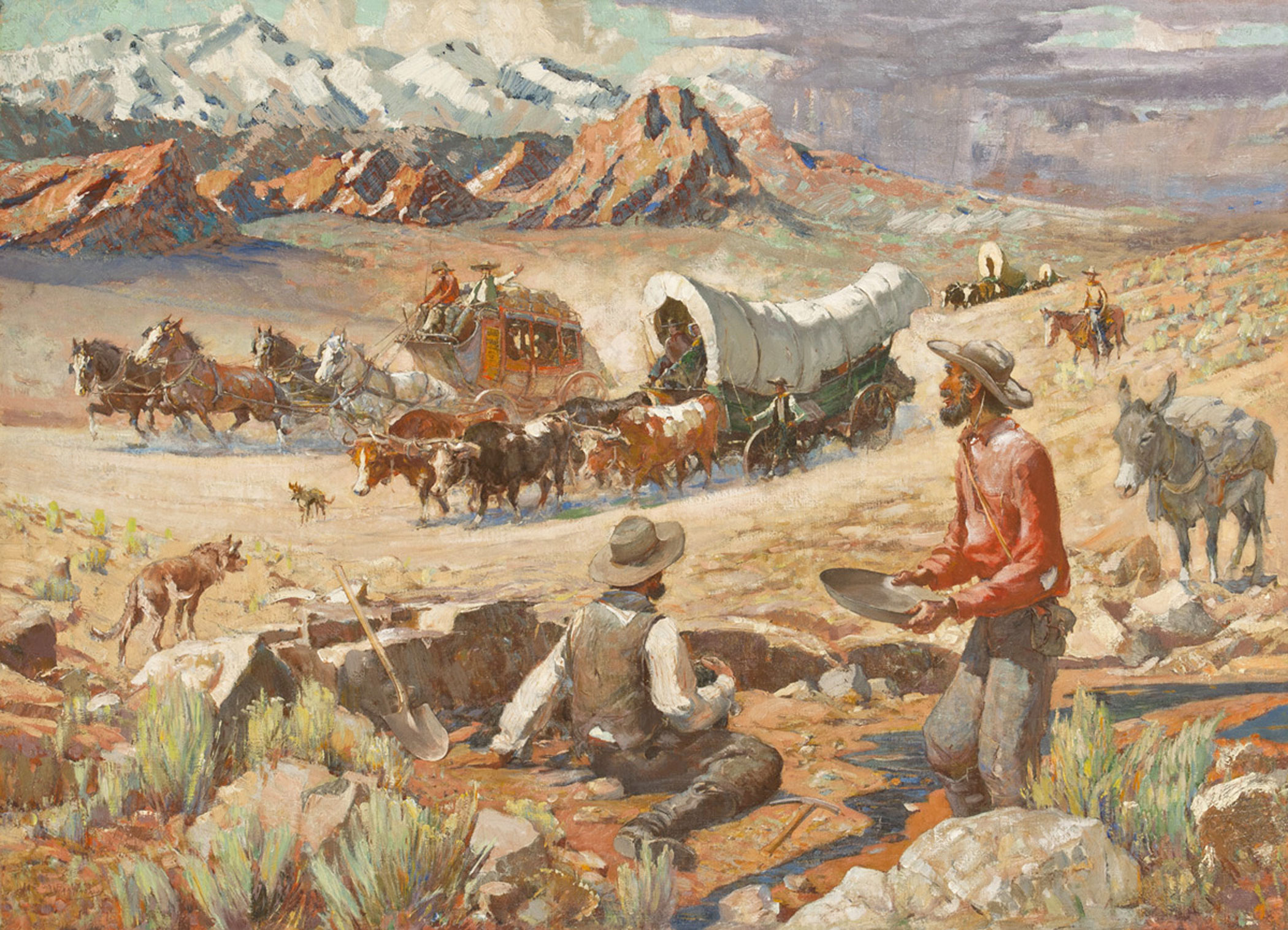
C &I talked with Mary Burke, director of the Sid Richardson Museum in Fort Worth, Texas, about the exhibition Legacy and the complex and fascinating Western history the paintings reveal.
Cowboys & Indians: Legacy portrays the clashes of various cultures before, during, and after “transition,” or “contact,” as some call the European encounter with the indigenous peoples of the Americas. Where did artists fit into these phases of contact/transition? How were they more than mere observers and documentarians?
check out our premium collection
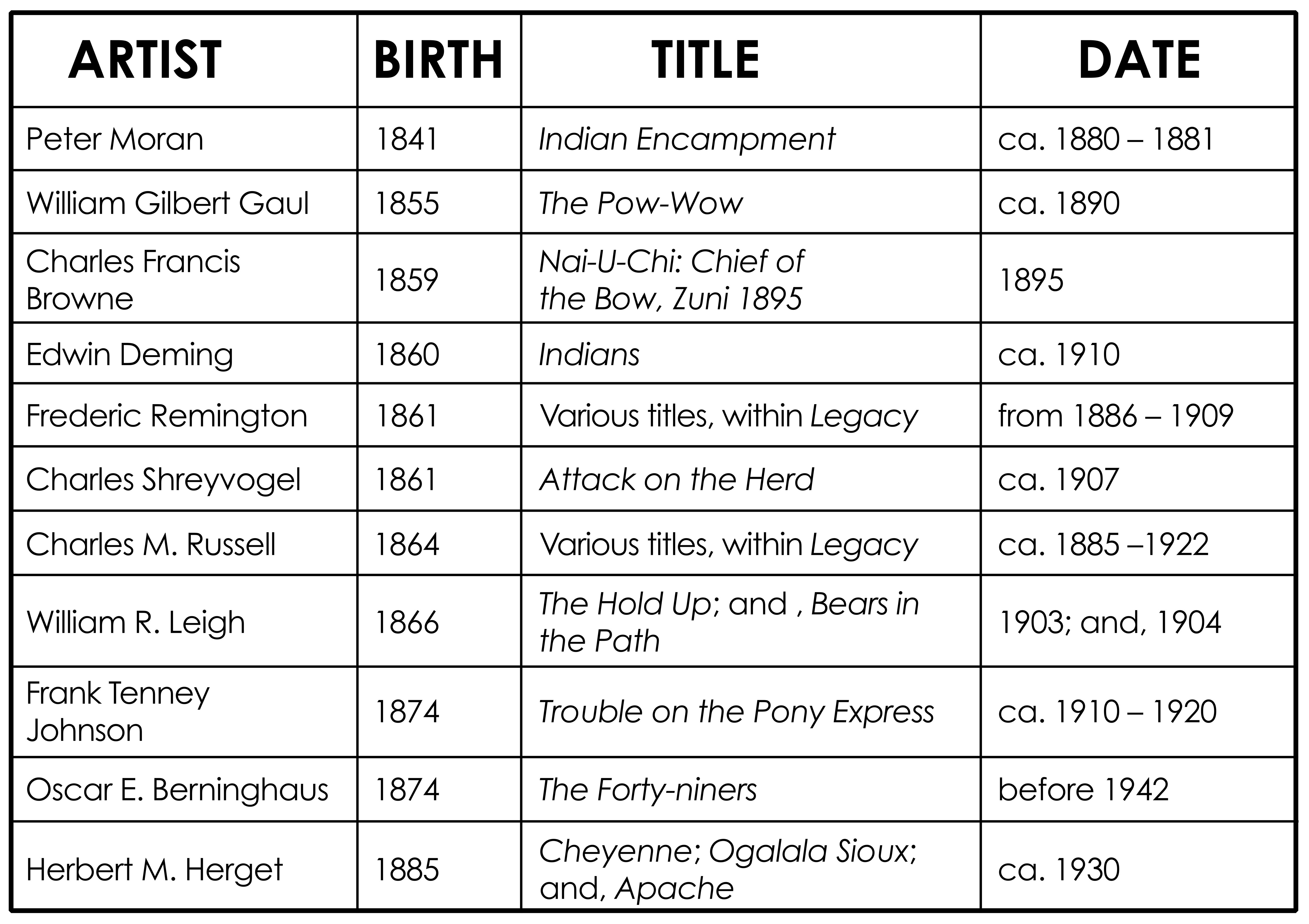
Mary Burke: It may be worth considering the years in which the artists [in the Legacy exhibition] were born (from 1841 to 1885), and the years in which the works were executed (from 1880 to before 1942), as during this time span the viewpoints regarding, and circumstances of, indigenous Americans changed greatly. And, in the case of Charles M. Russell and Frederic Remington, Legacy contains several works, from early through late stages of their careers, during which their viewpoints changed or matured.
C&I: Who among the artists represented were advocates for the indigenous cultures, and in what ways?
Burke: Your question is wonderful and requires more space than your article allows, so I share instead a glimpse into the views of Charles M. Russell, as his works form the bulk of the Sid Richardson Museum’s collection.
Russell, who was once quoted as saying that the indigenous American was “the onley real American,” painted indigenous American subjects more than any other, and generally, with sympathy. He painted individuals of his own acquaintance and a few portraits of celebrated leaders whom he had never met. He often went on sketching trips to the Montana reservations and attended rodeos and stampedes where indigenous American delegations were present.
The Midnight Troubadour
Tough and timeless, this polo is built for the long ride. Featuring a crisp, non-collapsing collar and a rugged, stretchy fabric, it's the perfect shirt for any cowboy's wardrobe.
In 1888, while working as a cowboy, Russell visited Blackfeet, Piegan, and Blood (Kainai) Indian communities, often wearing wool trousers that had been patched or reinforced with light-colored buckskin. The shape, color, and positioning on Charlie’s backside reminded the Blood Indians of the antelope, so they gave him the name Ah-Wah-Cous (antelope).
Russell often received indigenous American visitors to his studio, and after his death in 1926, [his wife, Nancy] received a visit from a delegation of Blackfeet Indians, who presented her with money they had collected to help pay for a memorial honoring the artist. Keep in mind members of the delegation would have had very little real cash in that day.
In the late 19th century, many homeless Cree, Chippewa, and Metis lived in Great Falls, Montana, Charlie’s hometown. Montana residents often regarded them with disdain, many advocating for their forced removal. Russell felt otherwise: “It doesn’t look good for the people of Montana that they will sit and see a lot of [Indian] women and children starve to death in this kind of weather. … [The white residents] would be the first to yell if their grub pile was running short and they didn’t have enough coal to keep out the cold.” (Johnson, Peter. “Landless’ Indian Roots Date to 1890.” Great Falls Tribune, 10 August 1896, p. 1B.)
Russell developed a friendship with a Cree leader, Young Boy, who was a welcome visitor to Russell’s home and studio. Young Boy shared cultural details of the Cree life, was an occasional model when Charlie needed, and a recipient of gifts of Charlie’s artworks.
When Charlie died, after the funeral services, Young Boy went immediately to his late friend’s home, words failing him: “I can’t say things, for my heart is on the ground.” (Source: the-midnight-troubadour Homer. Article [See page 8.]. TU2009.39.3899.1-16. Charles M. Russell Research Collection (Britzman). Late 19th century – early 20th century. Tulsa: Gilcrease Museum.)
He later wrote to Charlie’s widow, Nancy, expressing his condolences. “[H]e was a good man every place. I sure think of him and feel sorry for him just like my own relation.” (Source: the-midnight-troubadour 15, Epilogue. Taliaferro, John. Charles M. Russell: The Life and Legend of America’s Cowboy Artist. Little, Brown and Company. 1996.)
Also interesting and informative are excerpts from pages of a book written by his nephew, Austin Russell, describing Charlie’s opinion of indigenous Americans: (Source: C.M.R. Charles M. Russell, Cowboy Artist. A Biography. Twayne Publishers, New York, 1957. From the chapter titled “Charlie and the Indians.”)
“Charlie had not changed his mind about the Indians. He knew their faults and how stubborn they are, but he also knew how badly we have treated them. Said he, ‘If you ever went out on a frozen river and sawed ice all day with the wind screaming over the edge of the bank, you’d know why that’s one job the white man is willing to give the Indian. He won’t give him any other. The white man kills off the buffalo, takes the Indians’ land, deprives him of his only means of livelihood, refuses to hire him as a ranch hand, and then tells you that all Indians are lazy a bunch of stinking gypsies! They have become exiles in their own country.’
“The show was a cyclonic success, the take being four times as big as before; and when they had attended to the local poor, [Russell’s wife] Nancy still by virtue of sheer driving force the executive spent the surplus on blankets and food for the Crees, starving, freezing, and dying of pneumonia across the river. The church ladies objected but failed to make their objection stick and one, a very pious sister, said indignantly, ‘I wouldn’t have worked half so hard if I’d known we were going to waste the money on a lot of dirty old Indians!’ When Nancy repeated this at supper, Charlie went on the warpath, declaring he’d like to see her the pious lady in a tent out on the flat with not enough food to keep warm, but presently he calmed down and philosophized it, ‘I suppose she’s never in her life been really cold, or really hungry, and she hasn’t enough imagination to guess what a tent’s like in winter.’ He excused all sorts of things in other people on the ground that they just lacked imagination. They didn’t see everything in images as he or any other artist did.”
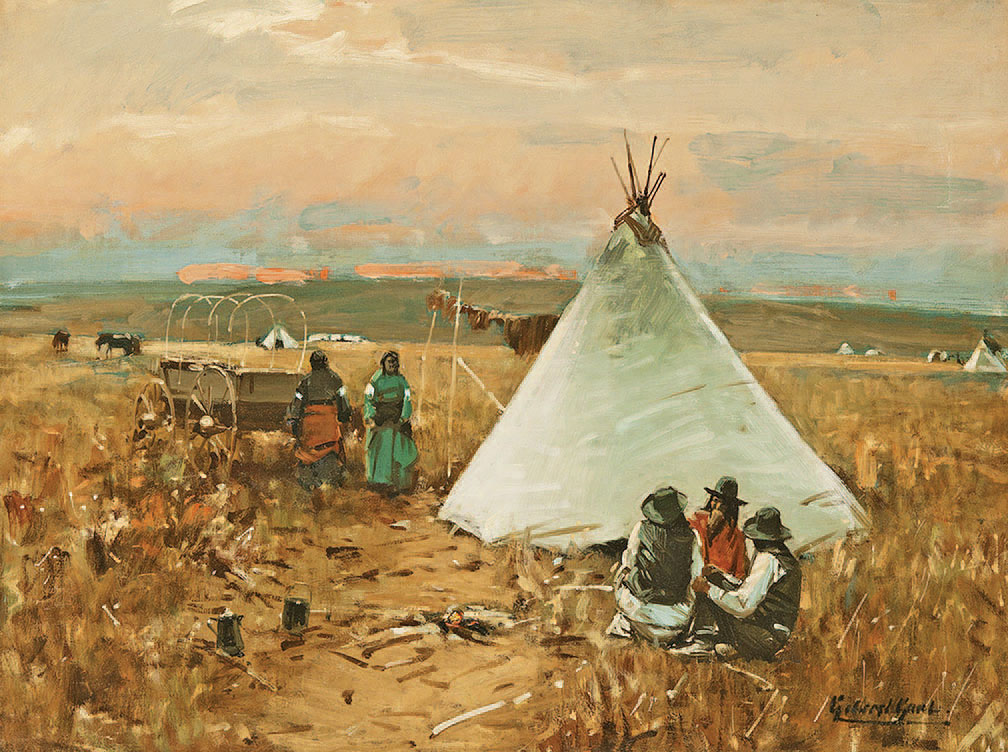
C&I: In our print article [C&I, November/December 2016], we featured the painting The Pow-Wow by William Gilbert Gaul. As painterly as his work is and as important as he was in the late 19th and early 20th centuries, how is it that he is now relatively unknown when compared with, say, Russell and Remington?< Source: https://www.cowboysindians.com/2016/10/cowboys-indians-and-artists/
