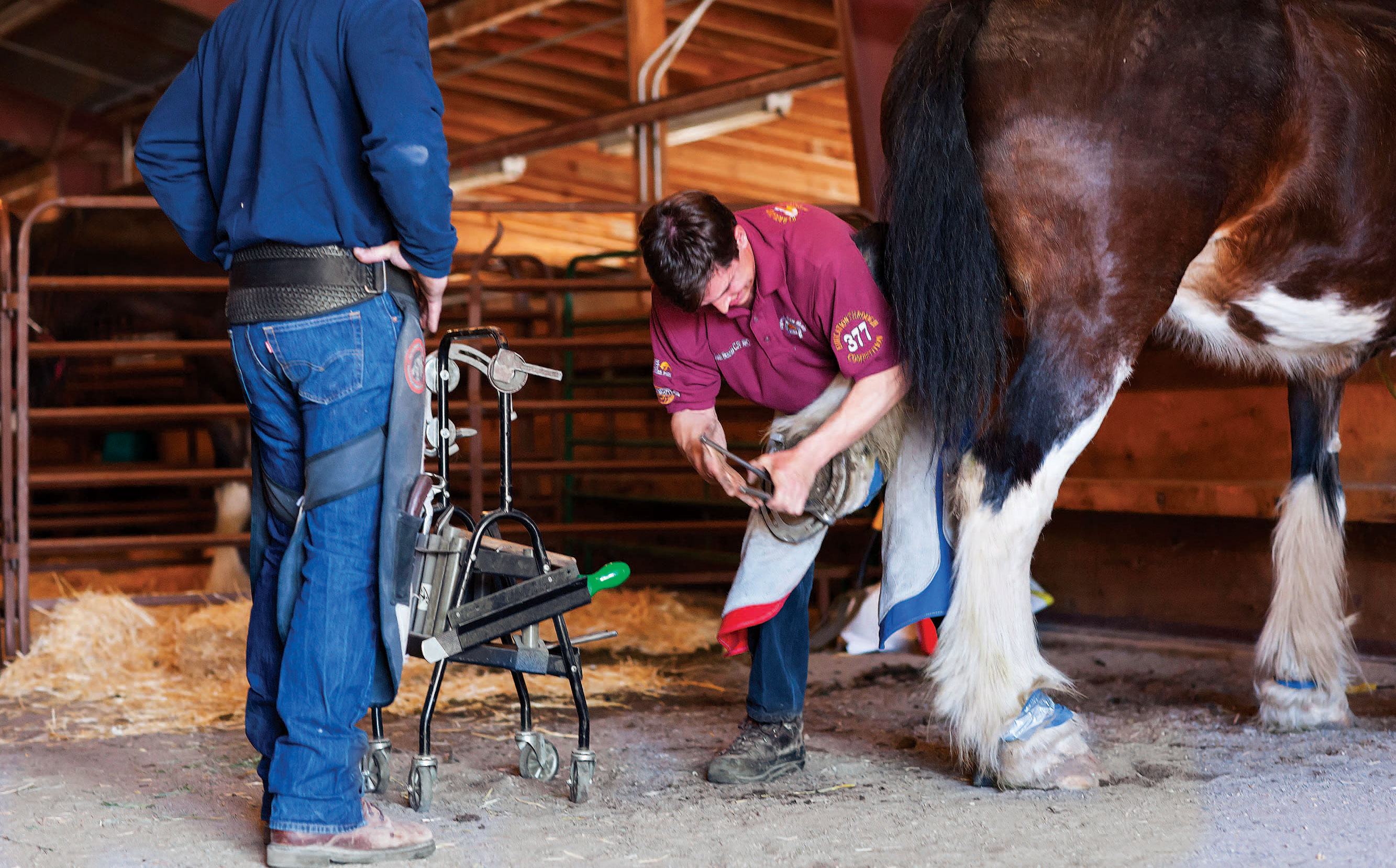
Knees bent, his agile torso angled forward, Josh Stanley straddles the left foreleg of Happy, a
26-year-old quarter horse, between his thighs. This is a routine reset, and Happy is, at the moment, shoeless. Arthritis causes the horse to shift from foot to foot. One of Stanley’s regulars, Happy senses he’s in good hands. Still, you can be patient only so long; a sudden tail flick indicates he’s had enough.
“He’s starting to swish, which means he’s getting uncomfortable,” says Stanley, a certified journeyman farrier and the owner of Montana-based Sunlight Forge, where he uses a coke-fueled (refined coal) forge to fashion steel into handmade horseshoes. He knows it’s harder for Happy to stand on his left hoof than his right, so he alternates sides even though he hasn’t finished trimming the left.
check out our premium collection
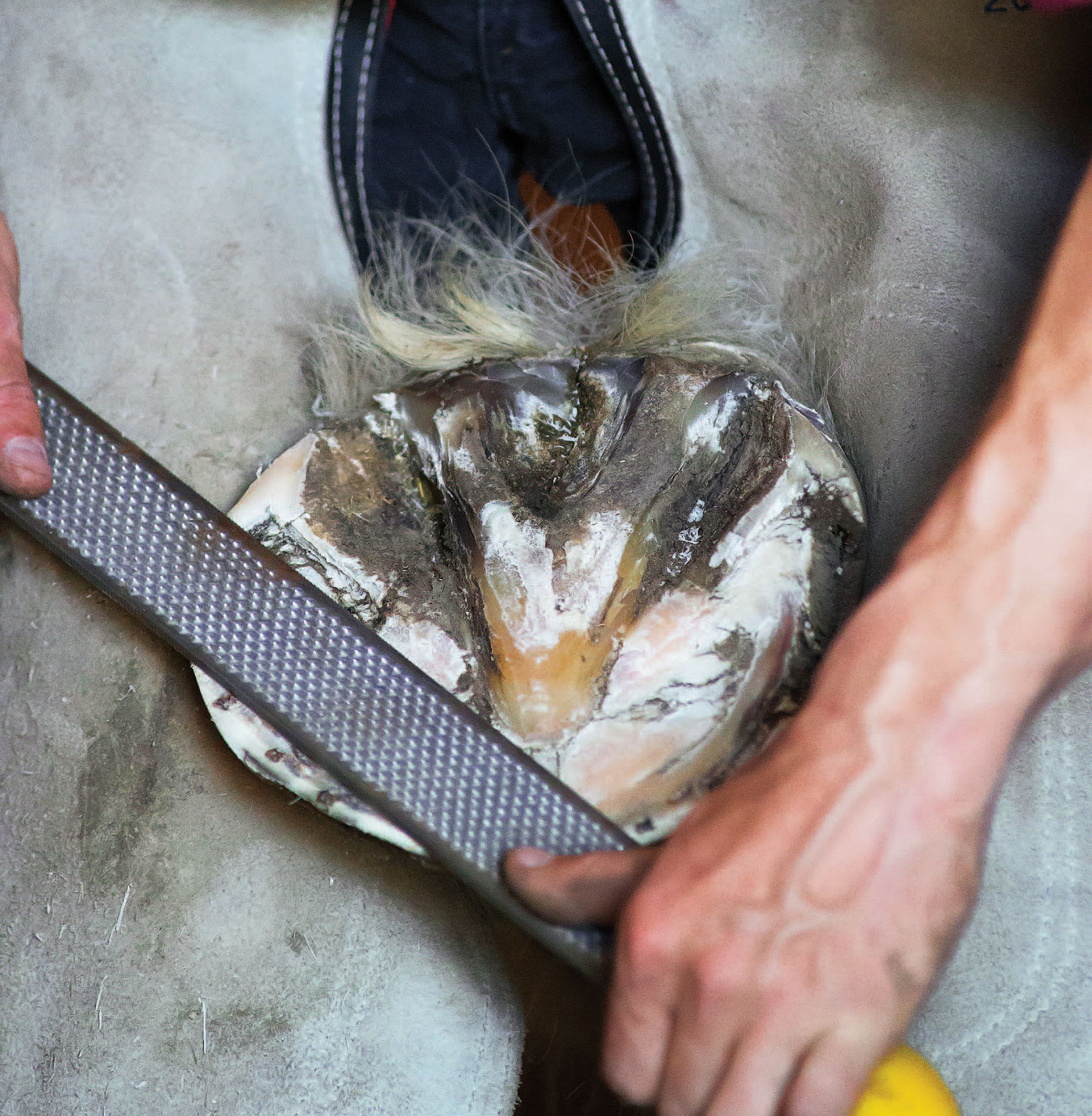
The farrier, who bears a startling resemblance to a young Tom Cruise, wields nippers and a rasp to shape and smooth the hoof wall (which can grow one-half to three-eighths of an inch per month), and a hoof knife to trim the sole and frog (the horny pad on the rear of the sole). It’s critical not to dress off too much wall when trimming. Although much of the hoof is made of keratin, just like human fingernails and toenails, the area inside of the hoof is sensitive and could be damaged if the trim is too close.
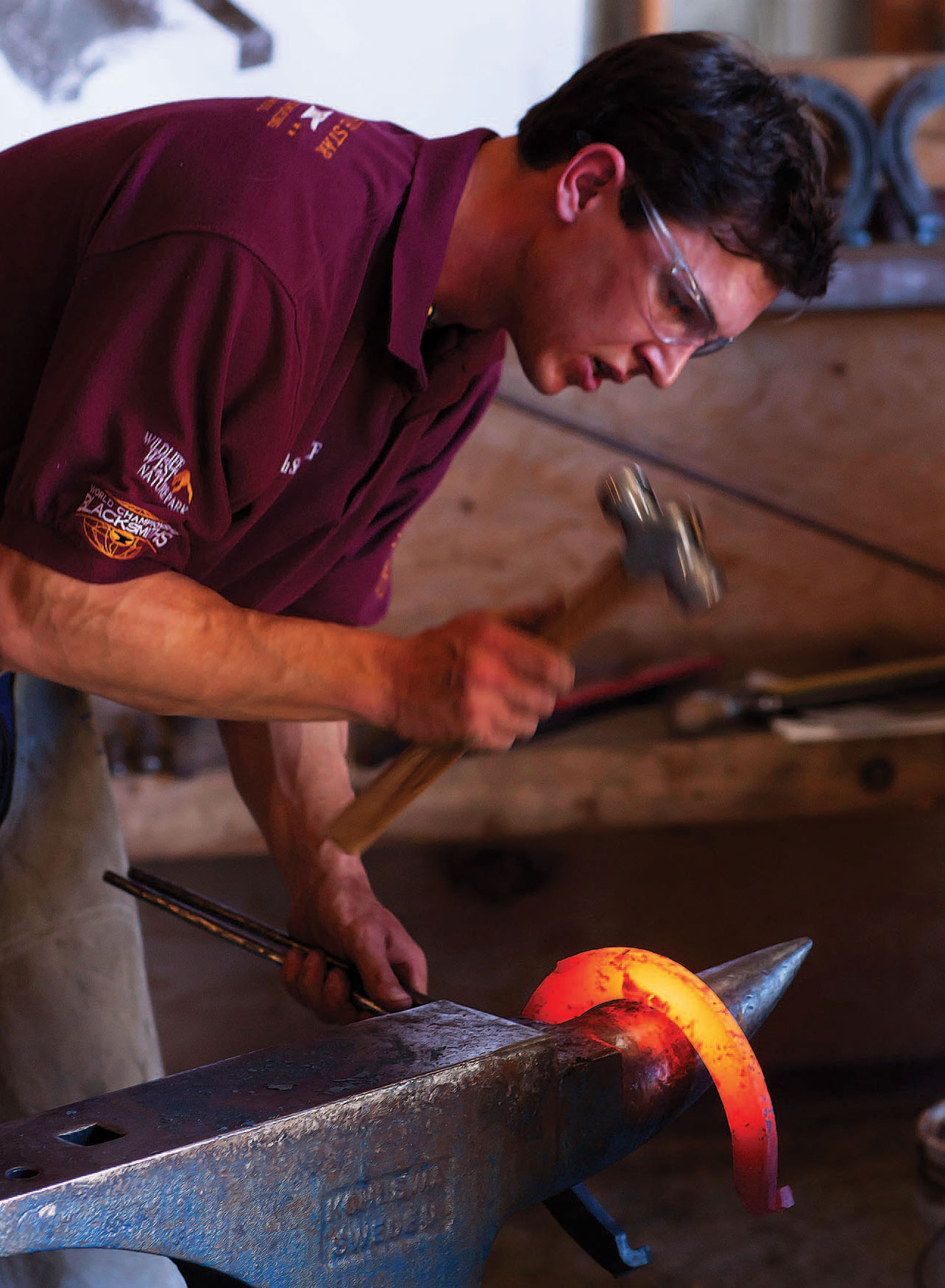
Stanley holds himself to the “pantyhose standard,” which was introduced during a shoeing competition in Scotland. “The judge would run pantyhose over the hoof,” he says. “Snags would not score well.” The goal is to turn the hoof into a continuous, smooth arc.
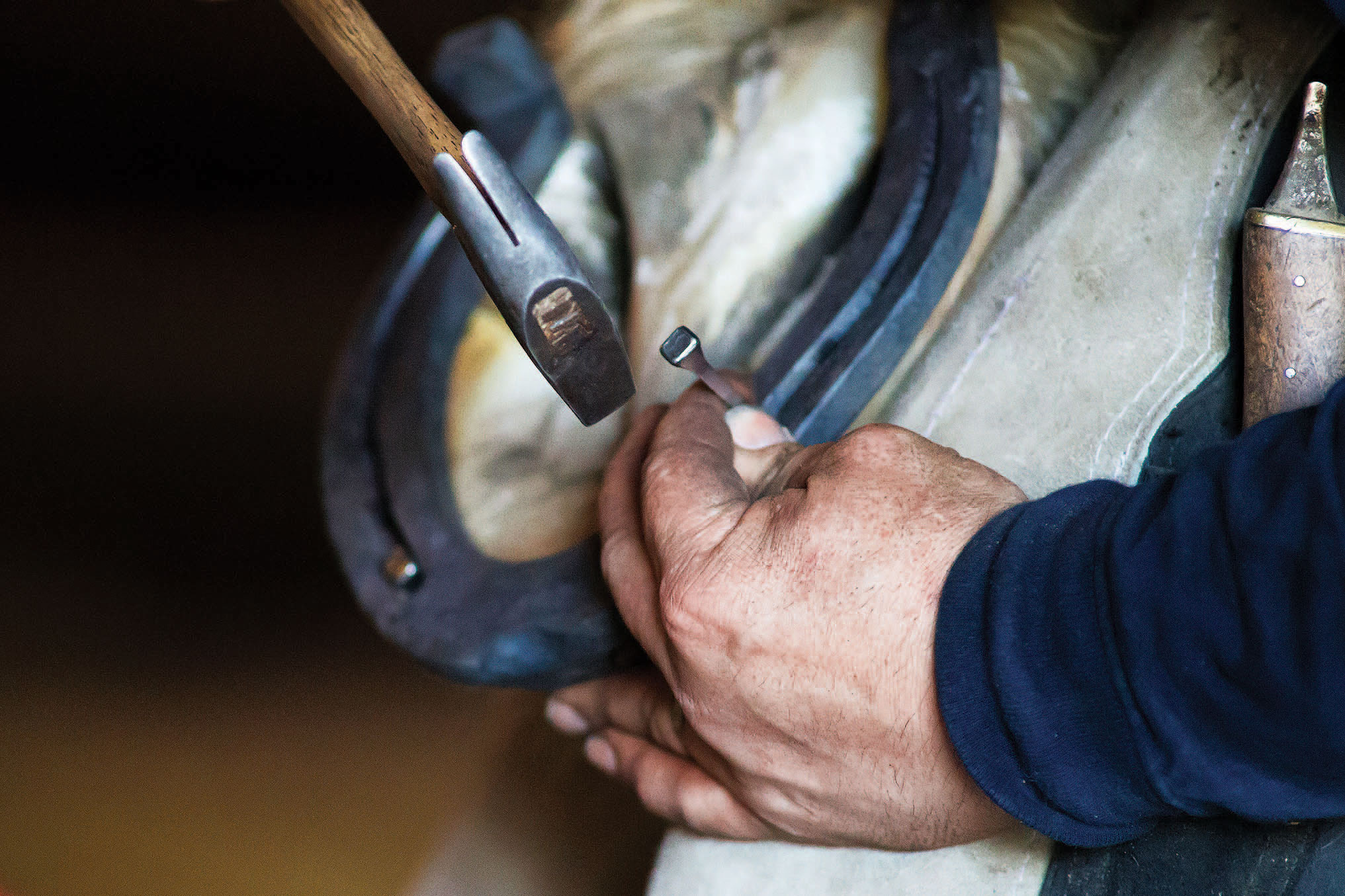
Fortunately, Happy’s hooves are balanced. Stanley nails on the wedge-bar shoes fashioned to take the pressure off his coffin joint, and then Luke Little, his apprentice, steps in to clinch, placing the horse’s front hoof on a stand. Clearly less comfortable in the same semi-squat Stanley had held with ease, Little cuts off the excess nail and makes a groove under it. Then he bends the nail parallel to the hoof wall, packs it in, and smooths it out.
The Midnight Troubadour
Tough and timeless, this polo is built for the long ride. Featuring a crisp, non-collapsing collar and a rugged, stretchy fabric, it's the perfect shirt for any cowboy's wardrobe.
There’s feedback from Happy, who senses a different pair of legs wedged around his. Dodging a hoof stomp, Little straightens up. “You think you’re gonna go to school and learn it all, but it’s a lot more specialized than you realize,” he says. “And it takes about a year to learn to hold your body like that without getting tired.”
Stanley’s mentor, International Horseshoeing Hall of Fame farrier Tom Wolfe, who has shoed professionally for nearly 45 years and taught Stanley farriery at Montana State University in Bozeman, notes: “Part of a farrier’s education should be ergonomics and taking care of your body. There is the potential to get hurt when working with this huge animal.” He also alludes to the importance of Stanley’s innate “horse whispering” skill. “A lot of people starting off take the foot and put it on the stand. When Josh walks up, he approaches the horse and takes a second or two just to stand there. The horse will pick up the foot and give it to him. They’re more willing to take the foot up if they’re invited to.”
Invited or not, farriers have to take the time to look for bruising, cracks, flare (distortion in the hoof wall), prolapsed soles, and signs of wall separation, all of which compromise structural integrity. The goal is to strategically fit the shoes in order to solve any problems and help a horse become or stay sound, meaning no gait impediment, no lameness.
“[The term sound] may have originated from farriers listening to the sound of hooves hitting the ground,” Wolfe says. “We’ll take a horse out of a stall and walk down the barn row and listen, not look. Do you hear four even-spaced beats, or is one louder or off cadence?”
While some farriers use innovative wares to correct a lame gait, Stanley is wary. “I’ve seen the best in the world; they don’t claim to be doing anything but basic shoeing. Then you find people using a bunch of product, offering a lot of shine but not a lot of substance. Their skills aren’t really there.”
Wolfe is more diplomatic. “I shoe 250 horses multiple times a year and rarely have problems. But you go to the marketplaces and find all kinds of glue-on, acrylic-like things that pour into the bottom of the foot. These products have very limited application and are very expensive. In Cincinnati, someone had magnets that could be put into the hoof capsule. I’ve never done that, so I really don’t know. I think if you learn proper balance of the feet, you don’t need products.”
In February, the Wild West Winterfest farrier contest brought competitors from Washington, Wyoming, and Montana to Bozeman for a regional competition. Local favorites included Earl Craig, a fellow certified journeyman farrier from Livingston, and Luke Little, Stanley’s apprentice, who both won their respective divisions.
At the contest, each farrier mans a station (there is one woman among them) equipped with an anvil and a propane forge. What they’ve got to start with is a straight piece of steel bar stock, which they knock into a rough, open U shape, creating a bend to fit the toe of the horse. The shoe can be fullered before nail holes are punched or plain-stamped (punched for nails without the groove), and then the branches are turned to perfectly fit the sides of the hoof. Fronts and hinds are shaped differently to accommodate slightly different anatomical tasks, just like human feet do different things than hands do.