
Long before he was crooning tunes and waxing romantic as country music artist Deacon Claybourne on TV’s Nashville — and even longer before he actually took the stage and scored a real-life success with audiences at the Grand Ole Opry — Charles Esten relied on his musical prowess to impress a very special lady.
It was back in the 1980s, during his days as an economics major at The College of William and Mary in Williamsburg, Virginia, when his extracurricular activities included performing as lead vocalist with a band called N’est Pas.
check out our premium collection
“I looked out in the crowd one night,” Esten recalls en route to one of his favorite Nashville eateries. “And that’s when I saw her. I’d seen her before on campus, but I’d never met her. And I’d always seen her with this guy. But he wasn’t with her that night. As soon as I spotted her, I told the other guys in the band that we were not gonna sing what we usually did at that point. Instead, we did Dire Straits’ ‘Romeo and Juliet’ — and I sang it right to her.”
Patty Hanson, the lady Esten serenaded, took notice. One thing led to another, and the couple eventually married in 1991. Now they’re with their three children — daughters Taylor and Addie and son Chase — in Nashville, where Esten has been gainfully employed since 2012 on the ABC television series about love and life in Music City.
“And here’s the funny thing,” Esten says as we near our destination, a popular delicatessen whimsically named Noshville. “I only recently found out — I can’t believe I never knew this — that ‘Romeo and Juliet’ at that moment was her favorite song. I’d been a big fan of Dire Straits like so many people, but that particular song ... ” His voice trails off into soft laughter. Then he adds: “I just pulled a card out of the deck and it happened to be her card, which was amazing.”
The Midnight Troubadour
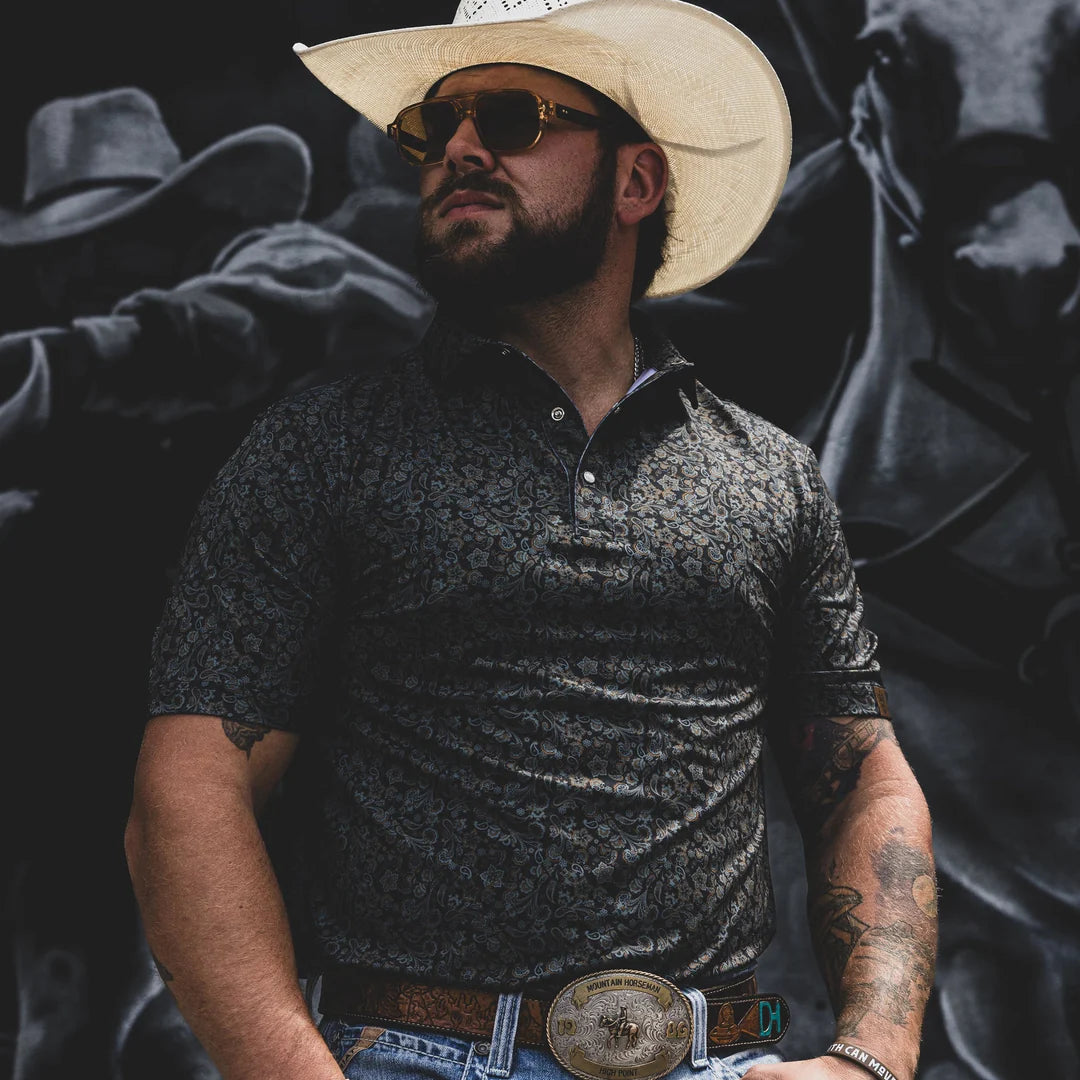
Tough and timeless, this polo is built for the long ride. Featuring a crisp, non-collapsing collar and a rugged, stretchy fabric, it's the perfect shirt for any cowboy's wardrobe.
Patty has been Esten’s muse and partner throughout his more than two decades in show business, providing inspiration and encouragement during the hardscrabble years prior to his breakthrough gig: Buddy, a well-received jukebox musical in which he starred as the legendary Buddy Holly for more than two years, first in London’s West End and later on tour in the United States. (At various points, he performed for the British Royal Family, and, later, at the White House for George and Barbara Bush.) As the journey continued, Esten accumulated such diverse credits as improvisation on both British and American versions of Whose Line Is It Anyway? and with The Groundlings comedy troupe, as well as one-shot and continuing roles in TV comedies and dramas (he’s particularly proud of a brief run on The Office and guesting on two Star Trek series, Next Generation and Voyager). Along the way, he even landed on the quiz show Sale of the Century as a contestant; winning about $34,000 in cash and prizes helped him endure a discouraging dry stretch early on in L.A.
Esten also gained invaluable experience while playing small roles in several movies: The Postman, Thirteen Days, and Swing Vote, starring Kevin Costner, for whom Patty worked for almost five years as an assistant.
“Kevin’s been a real friend,” Esten says. “To me, and to my family. But I have to say that, at one point, well, when you’re working around someone like that when you’re young, you might think, Hey, I can do this — I can be at this level. The future’s wide enough open that anything can happen. But then years go by and you get some wins and you get some losses. And you start to reassess.”
Esten recalls the pain he felt after auditioning several times with Tom Hanks and Steven Spielberg and then not getting a meaty role in the award-winning Band of Brothers miniseries. But he also recalls how Patty helped him endure the loss and forge ahead.
“I don’t know how people go through this business, A, without a faith of some kind and, B, without that significant other beside them who loves them unconditionally, whether they get that role or not, and thinks no matter what that Steven Spielberg was wrong, and Tom Hanks was wrong. I remember Patty wrote me a letter saying, ‘I know how much this hurts, but this is just a step [toward what you want] and you’re going to find it. You’re going to be great.’
“When we were packing to move to Nashville, I showed her that note. And I told her: ‘I wouldn’t be as good at this without that.’ You know what I mean? It sort of all goes into making you who you are. Especially for this character, Deacon Claybourne, who’s been through it all.”
Charles Esten — or Chip, as he’s known to longtime friends and instantly impressed journalists — took me on a journey through Nashville, the city, that included stops at locations seen on Nashville, the TV series: Southern Ground recording studio, where he worked with Nashville executive music producer Buddy Miller on a song destined for both iTunes and the season four premiere episode; socialite and philanthropist Sylvia Roberts’ palatial Belle Meade home, which doubles as the home of Nashville character Rayna Jaymes (Connie Britton) in the series and served as the scene of our C&I photo shoot; Noshville, where the pastrami was as delicious as Esten was entertaining; and, finally, the Grand Ole Opry, where he elicited roars of audience approval as the final performer on the Wednesday night bill.
Here are some conversation highlights from our Music City visit with Esten.
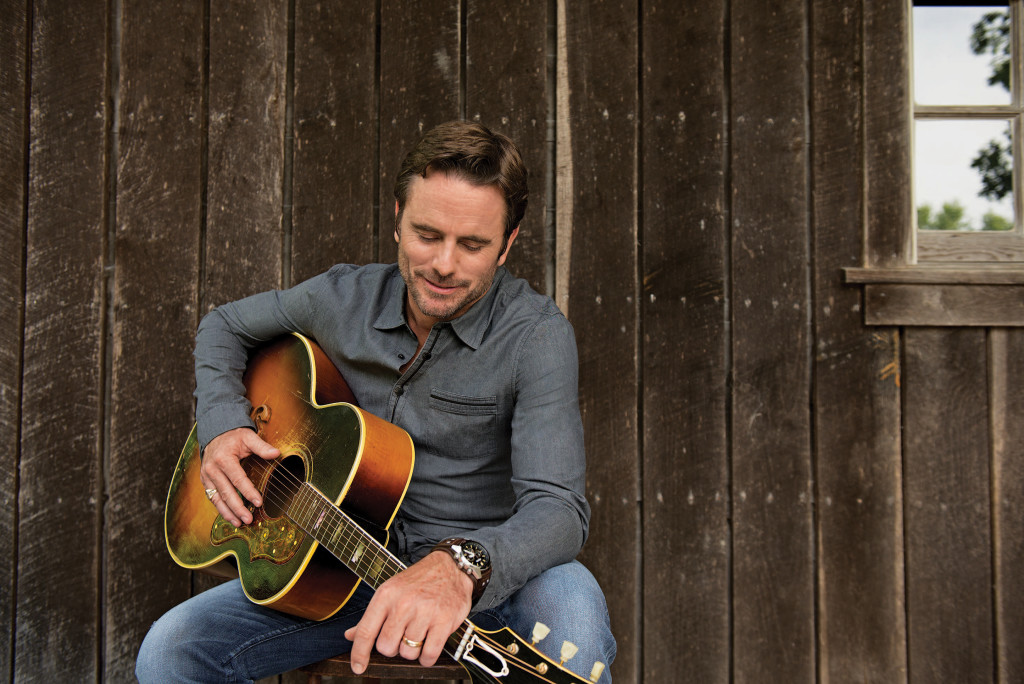
Cowboys & Indians: During the CMA Music Festival here in Nashville in June, it seemed like you were performing everywhere. And tonight you’re onstage — again — at the Grand Ole Opry. I guess it’s safe to say you don’t just play a country music singer on TV ...
Charles Esten: Well, what are you going to do if they invite you? Say no? No, you’re going to respect it, honor it, do your very best. Besides, the expectations will probably be a little bit low tonight, so all you can do is try to outstrip their expectations.
C&I: The Grand Ole Opry wouldn’t invite you to perform multiple times if you weren’t any good. And you did have all that experience playing and singing Buddy Holly.
Esten: [Laughs.] By now, I do feel better about it. But I still always feel a bit like an interloper because of the way I got on versus the way others have gotten on. I’m not talking myself down. I’m just saying I’m not putting on airs or puffing out my chest and saying, “I deserve to be here.” It’s the opposite. It means so much to me, and I’m so blown away by it.
I remember the first time I was on, it was so clear to me the first song I was going to sing was Buck Owens’ version of “Act Naturally.” You know: “They’re going to put me in the movies. They’re going to make a big star out of me. Going to play a scene about a man that’s sad and lonely — and all I got to do is act naturally.” That sort of undercut any “Here’s my serious country song” stuff. The very first one says it all: I know why I’m here. What are we going to do? I might as well go for it.
C&I: I was fortunate to catch the 40th anniversary screening of Robert Altman’s Nashville at The Belcourt, the great art-house theater here, back in June. Before the movie, they showed archival TV news footage of the local 1975 premiere — and it was very clear that many people in this community, including some well-known country music artists, were not happy about the way Altman portrayed Nashville. Did you worry whether you might get a similarly negative reception for your TV series?
Esten: I did think about that. Although I have to say that I was so busy doing the work [in the pilot episode] that I wasn’t sitting back thinking about it that much. All I knew was that I got to hold a prewar Martin guitar, sit across from Pam Tillis, and be in the actual Bluebird Cafe singing a gorgeous song written by amazing local songwriters. Then I got to be in a scene with Hayden Panettiere, and then later I got to be with Connie Britton. I was trying to really focus on just the performance and the work.
After that was done, though, I will say I started to think about that. But the reason I did was, in some ways, the city of Nashville was more nervous than we were, inasmuch as they had been burned before. I’m not saying [Nashville Source: https://www.cowboysindians.com/2015/09/charles-esten/
