
Tiny shimmering glass seed beads can highlight the power of art to heal, transform, provoke, and inspire. Native American artists Jamie Okuma, Karis Jackson, Ken Williams Jr., Martha Berry, and Teri Greeves have created elaborate pieces that do just that.
These artists come from a mix of backgrounds, age ranges, and interests, yet they have much in common. Most have been beading since childhood and were encouraged by a mother or grandmother. Most are self-taught, though some have sought formal art education to complement and enhance their skills. All have won awards for their work.
check out our premium collection
Each artist educates through the vocabulary of beads. Individual beads act like words, strung together in sentences. Backed with buckskin, the images tell stories about inspiring leaders, pass on cultural histories, and celebrate the qualities of animals and the beauty of nature.
Each artist can tell the story of a piece — when it was made, what he or she was experiencing in life at that moment, and what inspiration triggered the design. These beaded objects are deeply personal. The artists share bits of themselves, transferred from their nimble hands to the needle, string, and beads to create images of beauty to share with the world.
The Midnight Troubadour

Tough and timeless, this polo is built for the long ride. Featuring a crisp, non-collapsing collar and a rugged, stretchy fabric, it's the perfect shirt for any cowboy's wardrobe.
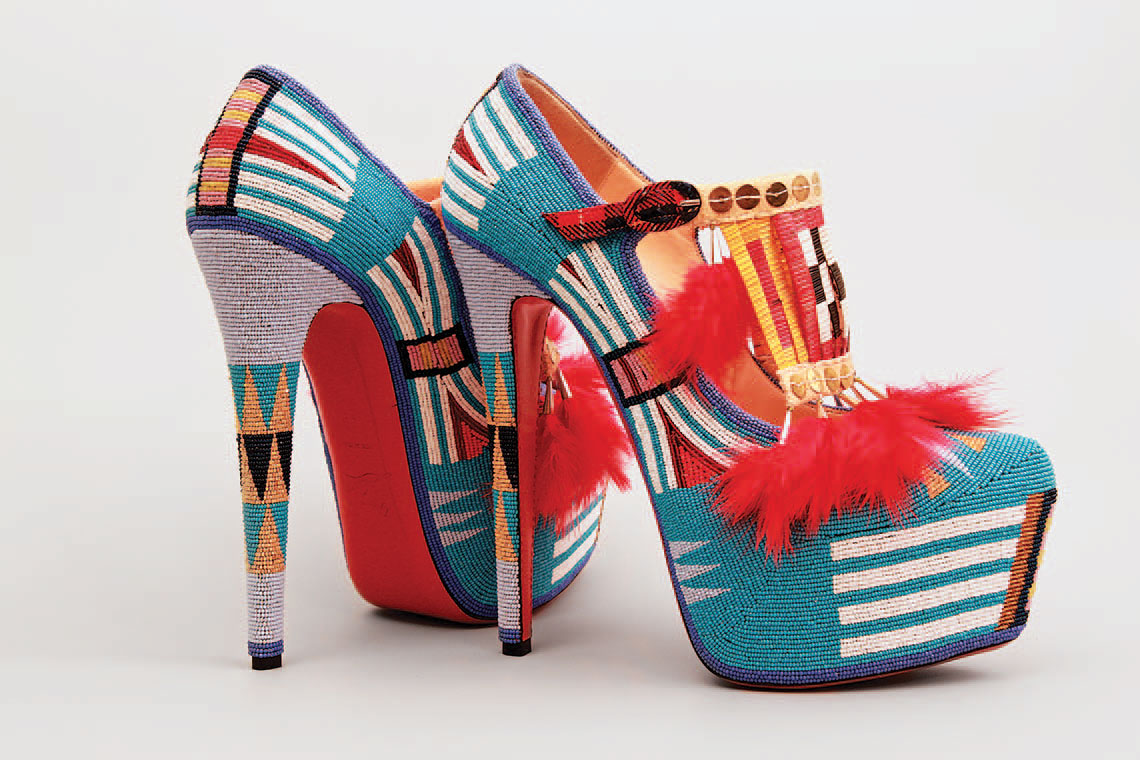
Jamie Okuma
Luiseño/Shoshone-Bannock
“What started out as a necessity for being able to dance at powwows as a child turned into a career in art.”
To truly appreciate the breadth of creativity in Jamie Okuma’s artwork, you must be willing to appreciate and revel in the power of contradictory elements.
Okuma arrived on the art scene when she won Best of Show at the Santa Fe Indian Market in 2000 for a soft-sculpture doll featuring miniature historically accurate traditional regalia and beadwork. These tiny tributes to the past were immaculate, taking months to complete and garnering great demand from collectors. While she created the models, she considered changing course and designing ready-to-wear fashion and couture garments.
After 15 years of creating the small soft-sculptures, Okuma is now a fashion artist, and she has shifted her focus to making wearable art. Her historically inspired beaded accessories remain a central component of her new fashion-forward body of work.
Known for fully beaded designer shoes, spike-edged parfleche purses, and Plateau-inspired cuffs, Okuma’s work is undeniably luxe. She prefers high-end or rare materials, and she never skimps on beading every inch. “Detail and quality,” she says, “are the two elements I obsess about most.” Her work can be characterized by bold geometric Plateau designs with stylized flowers, birds, or animals beaded on shoes, bags, and cuffs. She often incorporates old vintage beads to get rich, rare hues. One of her circular bags boasts a huge fully beaded rose. The long metal spikes that edge the piece seem to echo the reality of thorns: Look, don’t touch, for the beauty will defend itself.
Pieces like this show that her work isn’t just glitz and glamour — it’s also thoughtful and reflective. She can recall each project distinctly: What was going on in her life ends up in her beadwork.
For example, Okuma’s beaded Christian Louboutin boots featured in the Native Fashion Now exhibit (on display October 2, 2016 – January 8, 2017, at the Philbrook Museum of Art in Tulsa, Oklahoma) are covered with swirling swallow birds made from antique beads. Luxurious, beautiful, and meticulously beaded, the images on these boots depict her childhood adventures on her grandfather’s land. She shares a part of herself in each of her art and fashion designs, contributing to our understanding of the human experience and bringing beauty into our lives through carefully beaded thoughts and memories.
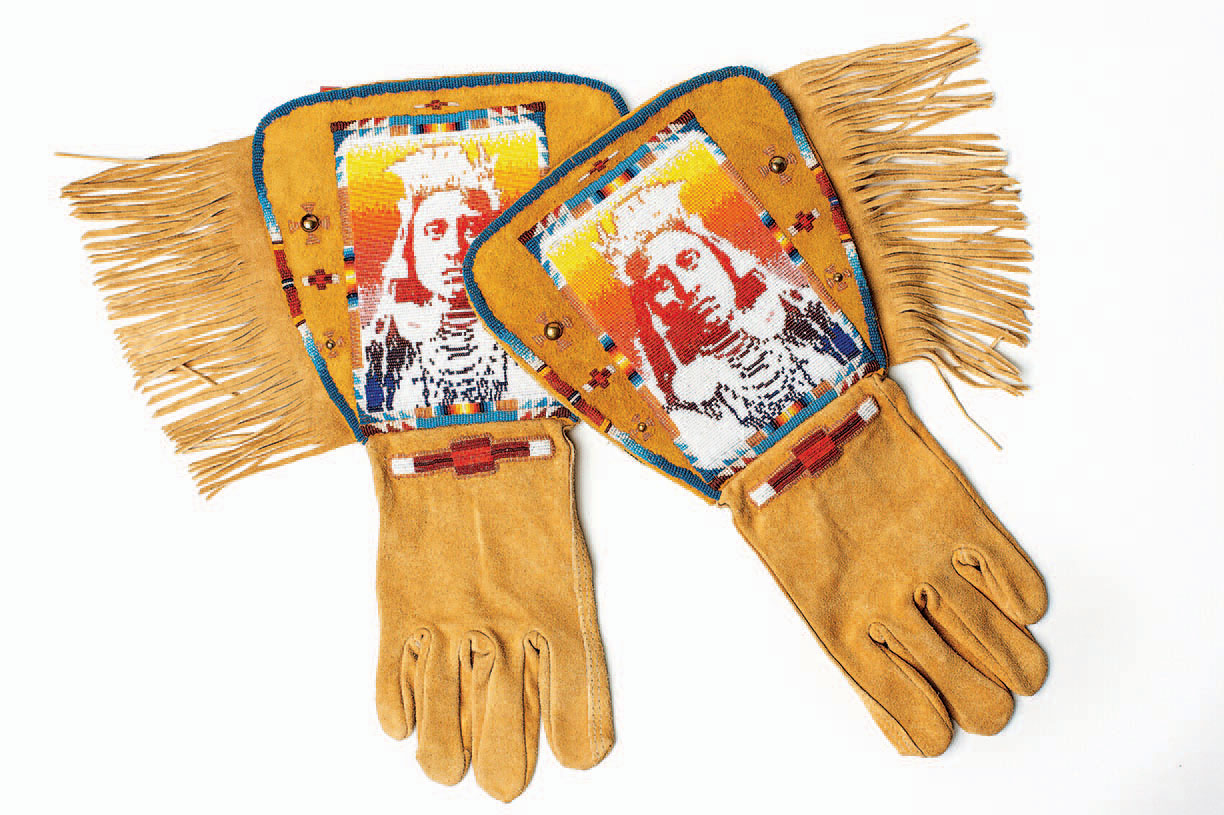
Karis Jackson
Crow/Hidatsa/Arikara
“I’m just happy to be on this path, this journey.”
Up-and-coming artist Karis Jackson recalls her first piece of beadwork — it was a small flower for a pair of baby moccasins that she made by her grandmother’s side. Decades later, those tiny moccasins would go on to be worn by both of Jackson’s daughters, and, thanks to that first simple lesson from Grandma, her beadwork projects would develop into elaborate and award-winning pieces.
Jackson continued beading throughout school as she pursued a degree in the health field. “It’s the norm where I come from,” says the Montana-based artist. “There are so many amazing artists here.” For years, she made items for herself and family members, perfecting her craft and experimenting with design, yet she never formally sold any work. All that would change when she attended a workshop hosted by the First People’s Fund, opening her to a new art world and prompting her to think about her work from a different angle.
Her artwork is a labor of love. Jackson can spend months on a project, and creating a piece involves more than mere stitchwork. Researching old designs and flipping through old photographs provide the creative spark, followed by inspiration that flows through her and takes form in remixed designs on buckskin. A recent flat bag features the portrait of Old Coyote, who seems to be looking back at the viewer, coming through from another time and another dimension. Her decision to render his image in red gives this man a supernatural quality; you get the sense that his presence is still felt in the northern prairies on some old hidden Indian trails. The back side of this panel bag is embellished with an optically exciting design, one inspired by a textile pattern. To hold this piece and feel the weight of the beads in your hands is to feel Jackson’s passion for her work. By sharing her vision with the world, she not only honors the past, but also highlights the beauty of tradition.
This tradition of art creation is more than just figures and blocks of color — it’s about kinship, value systems, storytelling, and, perhaps above all else, it is about love for the mentors, for the ancestors, for the youth, and for the self. Twenty years after that first beaded flower took shape, Jackson still calls her grandmother daily to catch up and share their latest beadwork projects.
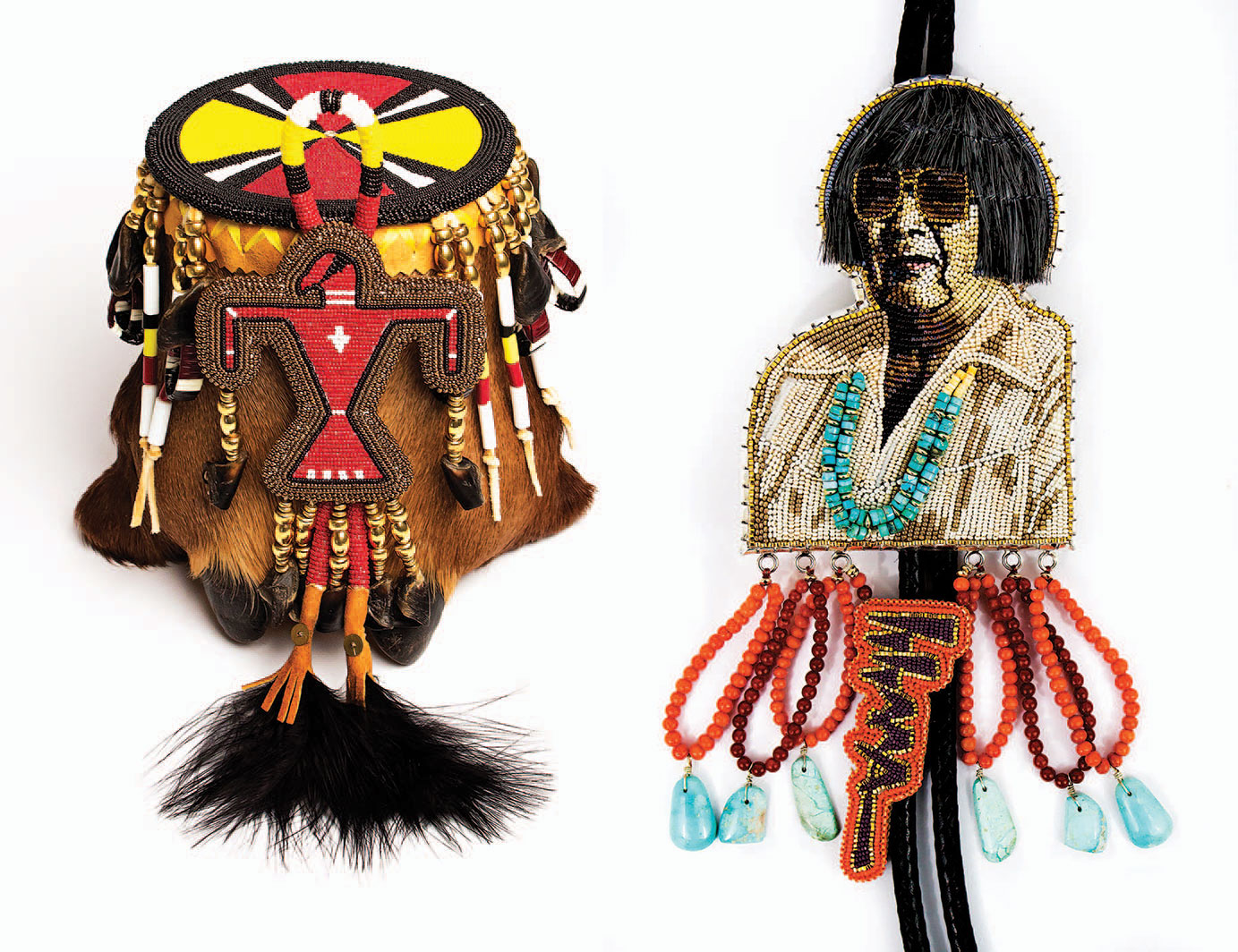
Ken Williams Jr.
Northern Arapaho/Seneca
“I am proud to say that my beadwork will continue to evolve, just as the traditions themselves have done so before me.”
The words whimsical and energetic are not often used to describe Native America
Source: https://www.cowboysindians.com/2016/08/beading-tradition/
