
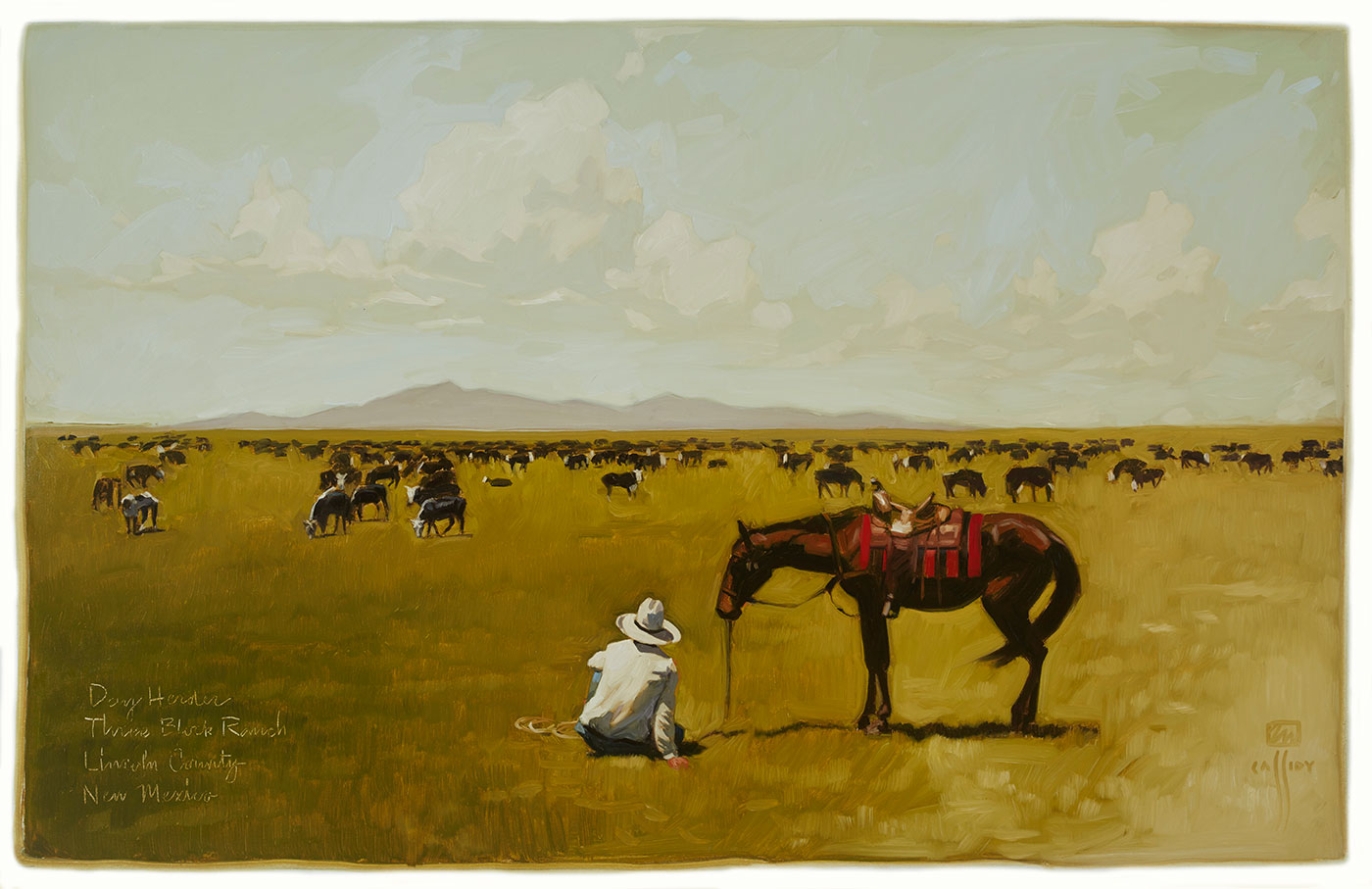
Michael Cassidy was featured in our August/September 2016 issue. In this web-exclusive portion of our interview with the Bend, Oregon-based artist, he talks about his motivation and his methods.
Cowboys & Indians: If you weren’t a painter ...
Michael Cassidy: I never really considered anything else. Not really. I just knew. It was one of those things. I just knew from a young age. My son’s going to be 22 this year and has no clue. He works and works hard and has had a job since he was 15. I asked him if he had any inclination about what he ultimately would like to do. He said, “Not a clue, Dad.” In that regard, I was really lucky.
check out our premium collection
What does the Scripture say? We take whatever it is that we do and we honor God with it. I’m a minister — I just do it with paint. It creates opportunities to be an influence in people’s lives, to create relationships.
C&I: But it wasn’t always that way. …
Cassidy: I was a terrible pagan for a while. I was 10 when my father died. I did every drug under the sun. Most of the people I grew up with are either dead or in prison. My mom was one of the original Jesus freaks. I didn’t want to hear it. Just before I turned 21, I was so tired of my life and I could see where it was going. I said, “God, let’s do it your way.” I’d had a gulletful of the world and saw where it was heading: death and destruction.
C&I: So the truth set you free into art?
Cassidy: You might not like the truth when you first hear it, but it sticks in your gullet and eventually you have to go that way. I just had to follow the truth wherever it led. I traded temporal things that I thought I wanted, and what I got back by giving up control are the things God really had for me. I think that every person that’s ever been born has the potential to be world-class in something or some combination of things, but so few ever realize that potential because the way there is found through persevering through one impossibility after another after another. So many times there seems to be no way forward. Maybe it’s “I don’t have the money” or “I’m stuck in my little town and don’t know anybody.”
C&I: Through your obstacles, you persevered and found your way to art school. ...
Cassidy: It was Mom and six of us kids. I chose the school I went to because it only cost $50. It turned out that that school had a better art department than any. It was an old-school sort of Euro atelier where there was a real emphasis on fundamental basics: life drawing, anatomy.
The Midnight Troubadour
Tough and timeless, this polo is built for the long ride. Featuring a crisp, non-collapsing collar and a rugged, stretchy fabric, it's the perfect shirt for any cowboy's wardrobe.
God gave me a stubborn streak. If I had not had passion and been stubborn enough not to settle for anything else, I never would have lasted.
My wife had to learn to live with it. She’d say, “The bills are due in two days. ...” And she would get PO’d. She learned that it was either, Hey, you trust God or you go crazy. Going crazy is not an option. My best teachers have been trial and pain.
C&I: How large do you tend to work?
Cassidy: Any size from 9 by 12 inches up to 6 by 8 feet. The subject will usually tell you what size it’s proper to paint. If you’re making it larger to make more money, that’s not a good method. It’s about the picture, not what it sells for. If I paint for the marketplace, I get lousy paintings.
C&I: Do you work from models or imagination?
Cassidy: I’m a figurative painter, so I need information — as much as I can get, even if I throw half of it out, which is usually the case. That information can come from models, photographs, sketches, etc. It’s almost always a combination of sources. I might have a concept that I start with that might change as the painting is being done. You just sort of follow it where it leads. Sometimes the really good paintings seem to paint themselves. It’s like autopilot. I just try not to get in the way and screw it up. Again, I seem to know it when I see it. I can’t describe how that works other than to say it’s a combination of inspiration from God and putting yourself in the place to receive it.
C&I: What about your inspiration?
Cassidy: I ask God for inspiration just about every day. Things just sort of come. I can’t tell you exactly how. They just jump out and say, “Paint me.” I just know it when I see it, which is I think a combination of God-given inspiration and working hard to get a feel for your subject. I research like crazy. I use models. I take a lot of photos when I travel. Most of the time a picture will be pieces coming from three to four different places all put together. It’s rare that you get it all in the same place, even with models. Then I edit that information to my needs. I might use a horse from one place, a figure from another, a face from another, and a background from another. All the pieces are authentic, but the scene never actually existed. Most of the time I spend more time on the concept than the actual painting. With wet-on-wet, you have three or four days max to work on something before the paint sets up.
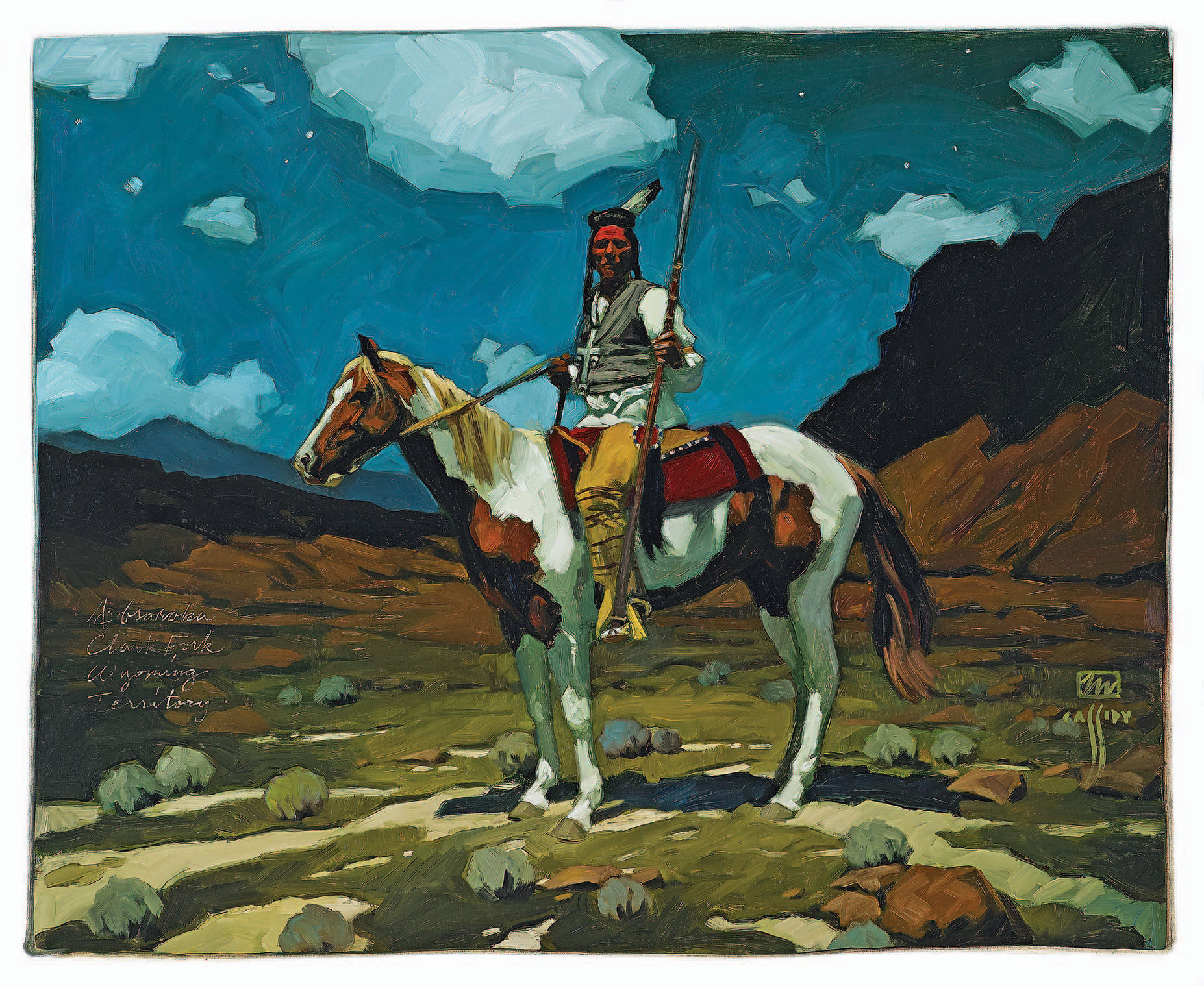
C&I: You paint sunny scenes in full light, but you also do the occasional night painting. What’s the story behind, say, Absaroka Nocturne (above)?
Cassidy: The model was Bad Hand in a session we did at Crow Agency last summer. That’s an example of model and background from different places. That’s the Clark’s Fork Canyon in the background as it comes out of the mountains. That was Crow buffalo country in the old days. I’ve seen some beautiful full-moon scenes out where there’s no city lights and wished I could somehow record them. There’s more nocturnal pieces to come in the future.
C&I: Explain the wet-on-wet technique you use.
Cassidy: Wet-on-wet is an old technique. It’s very simple but takes a long time to master. There’s no drawing on the canvas to start with. I cover the whole thing with a mixture of poppyseed oil and a little paint — usually a brown or muted green color. That color unites everything it mixes with. I start with large brushes and draw simple shapes until I get most of the major areas where they are supposed to be. A face, for example, starts with an oval shape of flesh tone; then I paint the basic planes of the face with a slightly darker color. Drawing with a brush just seems to make more sense to me than with a pencil. A picture is made of mass, not line, so it makes more sense to paint it with mass.
C&I: Then what?
Cassidy: Early on, I paint in the middle of the value scale without any really dark or light colors until I know everything is where it’s supposed to be and the proportions are correct; then I go from the middle of the scale out in both directions. I punch in the shadow areas and darker colors first, with the highlights last. It goes from big brushes with simple shapes to smaller and smaller brushes and more detail. I try and restrain myself from adding too much detail. Restraint is a beautiful thing. It’s a painting not a photograph. I want to see the action of the brush — the strokes. It’s not paint-by-numbers, and
Source: https://www.cowboysindians.com/2016/07/painting-and-preaching/
