
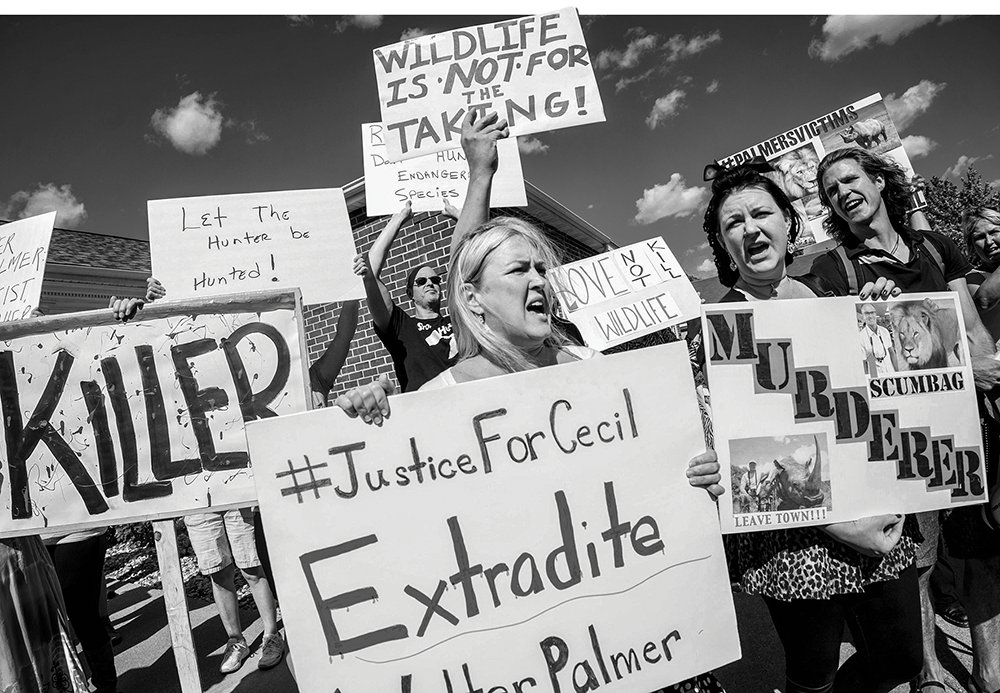
Mostly lost in the shrieking hysteria of last summer’s Cecilgate were the quiet voices of moderation.
One of those voices belonged to Dr. Rosie Cooney. The Australian zoologist chairs the Sustainable Use and Livelihoods group of the International Union for Conservation of Nature, a world body that strives to balance wildlife and human needs around the globe. In August, as the First World raged over the killing of a named lion in Zimbabwe, Cooney tried to reason with the unreasonable: Yes, trophy hunting has its pimples, she pleaded, but without it there’d be way fewer lions on the savannas of Africa.
But pragmatism seldom goes viral. Cooney’s informed logic was drowned out by hysterics from both ends of the hunting-animal-welfare continuum. No one seemed to fully grasp what Cooney meant by “models of conservation.”
Most hunters have heard the term “North American Model of Wildlife Conservation.” However, its details aren’t commonly understood. Even many conservation leaders wield the term incorrectly, as if the model were a sacred document that governs and guarantees the future of hunting.
The Midnight Troubadour
Tough and timeless, this polo is built for the long ride. Featuring a crisp, non-collapsing collar and a rugged, stretchy fabric, it's the perfect shirt for any cowboy's wardrobe.
The model is no Bill of Rights. It’s simply a set of abstract principles that began to evolve more than a century ago, ultimately enabling the restoration of species once exploited to the verge of extinction. Whitetails, mule deer, elk, wood ducks, pronghorns, turkeys, and others would have been listed under the Endangered Species Act if such legislation had existed back then. Yet each went from vanishing to flourishing thanks to seven principles that worked like cogs in a machine—a machine powered mainly by the money and passion of hunters.
Essentially, hunters in the 20th century helped solve some of the biggest, grimmest wildlife issues of the day. We did it by following the precepts of the North American Model.
But even though we tend to dwell on those old successes, the golden era of game restoration is long over. Modern conservation requirements have changed, and if hunting is to remain relevant in the 21st century, then our machine must be retooled.
Indeed, but revise with caution, says Dr. Valerius Geist.
It was Geist—a fiery Russian-born, German- and Austrian-reared retired wildlife professor at the University of Calgary—who originally articulated the principles some decades ago.
“The model is a piece of history. It’s not my history—I’m European. But it is one of North America’s great cultural achievements, and you should be goddamn proud of it,” insists Geist, with a stern warning. “What you see in the model is what survived after decades of evolution. It still contains wisdom that transcends many issues of today, and if it’s abandoned completely, we’ll all lose a hell of a lot.”
Point taken: Don’t throw the heart of the elk out with the gut pile.
Certainly, updating the North American Model will require the best accumulated knowledge and clearest vision of our entire community. So let’s revisit the model, examining each of the seven principles for its original intent, but also its modern relevance. Are the principles still positioning hunters to help solve some of the biggest, grimmest wildlife issues of the day? Or to protect the scraps of wildlife habitat that remain intact? Or to balance our sporting traditions against ever more complex—and ever more volatile—social tolerances?
The answers to these questions will inform how we address the next Cecil. Or the next doe wandering through the suburbs with an arrow in its rump. Or the next deer disease cultured and spread by deer farmers. Because this much is certain: There will be a next public-relations crisis that threatens to turn voters against us, revoke our hunting privileges, and functionally end our ability to be a positive, sustaining force for the wildlife we love.
If we hunters can engineer, fuel, and then represent a more relevant new model of wildlife conservation, then maybe we’ll be better prepared to disarm the looming histrionics with a stronger voice of moderation.
PRINCIPLE 1
WILDLIFE BELONGS TO THE PEOPLE
This is the weight-bearing pillar of the North American Model, a concept tracing back to the pedicles of Western Civilization. The ancient Romans were big on assigning ownership of all things either to the gods, individuals, or the public. Later, English legal codes declared wildlife to be communally owned, with the king serving as trustee. American colonies worked under that idea I U.S. independence voided King George III’s oversight of fish and game in the new country.
Historic Significance
Wildlife as a public-owned resource first appeared in American law in 1842, when the U.S. Supreme Court ruled that one citizen could not exclude others from harvesting oysters on a particular mud flat on New Jersey’s shoreline. A public trust doctrine was born. Subsequent courts have upheld and refined the premise that fish and wildlife belong to all.
Reality Check
By law, an individual may own land but not the wildlife that resides there. In practice, that’s a bunch of hooey. A landowner can essentially privatize wildlife and nullify 174 years of legal precedent with a $2 no-trespassing sign. A high fence (we see you, Texas) doubles down on privatization, keeping people out and wildlife in. The public trust doctrine is more and more at loggerheads with private-property rights.
Retooling Orders
• 1A: First, concede that leases and commercial hunting operations are here to stay. It’s your wildlife, but private landowners control your access to it. Admission is going to dent your wallet. Get over it.
• 1B: Develop more programs to connect hunters with private land. Prototypes include the Open Fields provision of the Farm Bill, Kansas’ Walk-In Access, Montana’s Block Management, and Wyoming’s Private Lands Public Wildlife programs. Bonus point: What if hunters led an effort to
