
The lone coyote works its way down the draw, the towering Bitterroot Mountains glittering with snow behind and above it. An inexperienced observer might think the wild canine is randomly cruising down the drainage, but I know better. It is deliberately and cautiously sniffing its way upwind toward a glob of gland lure I smeared over the branches of a bush yesterday.
The Midnight Troubadour
Tough and timeless, this polo is built for the long ride. Featuring a crisp, non-collapsing collar and a rugged, stretchy fabric, it's the perfect shirt for any cowboy's wardrobe.
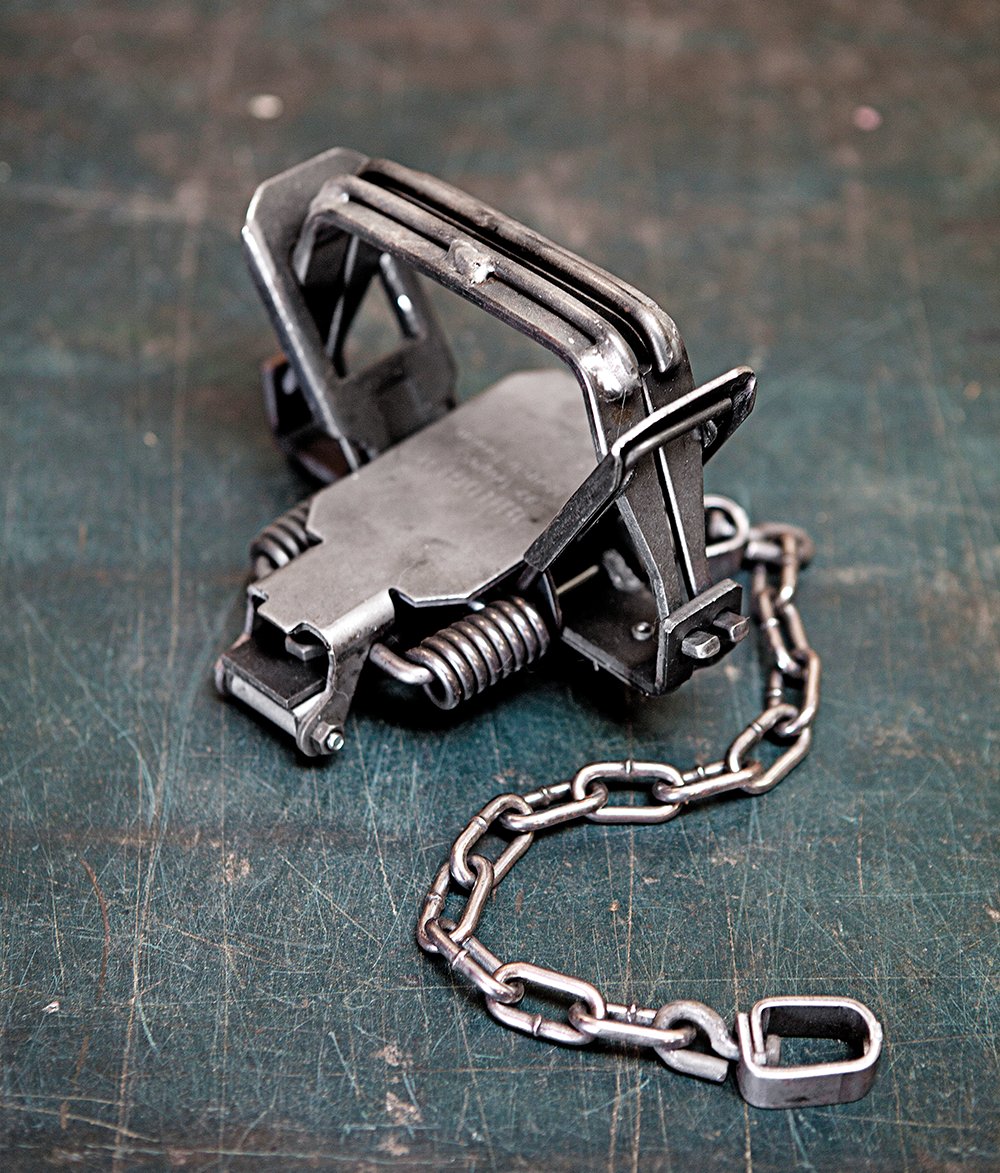
That coyote could walk anywhere in the million acres of land surrounding my set, but it doesn’t. It steps squarely on the 2-inch pan of the Number 3 coil-spring trap hidden under the scent branch.
After dispatching the coyote, I admire its fur. My job tonight will be to skin the plush pelt, and then I’ll stretch and dry it on a forming board in my garage. I’ll add the coyote’s pelt to the dozen or so other furs I’ve hunted and trapped this season. In a month or so, I’ll sell the whole lot to a buyer who knows a manufacturer with a contract to make garments. My Montana coyote will probably end up as trim around the hood or the collar of a high-end jacket that’s sewn and sold somewhere overseas.
This process of pelt collection, processing, and sale is repeated thousands of times a year in rural towns around the continent by individuals just like me—small-time trappers who enjoy the challenge of trapping and the opportunity to sell a few pelts to buy more traps and pay for a tank or two of gas to fuel our next check of the trapline. Together, we are the ragtag supply chain for an international retail fur trade that exceeds $14 billion annually.
Country Buyers
The pelt pipeline begins with local fur buyers, known in the lingo of trappers as country buyers. One of them, John Hughes of Roundup, Mont., has developed outlets across the globe for wild furs. Hughes prefers that local fur-takers bring skins directly to his unassuming 40-by-98-foot sheet-metal building, which every trapper for several states around simply calls “the fur shed.” Hughes looks over pelts with an eye tuned by decades in the fur trade, judging them for size, color, quality, and a subjective assessment of the fur called “primeness,” and makes an offer on the spot.
His orders for furs may come from faraway buyers, like a women’s garment manufacturer in Italy, or a fur broker in China. Or he may sell your pelt to a neighbor just down the road.
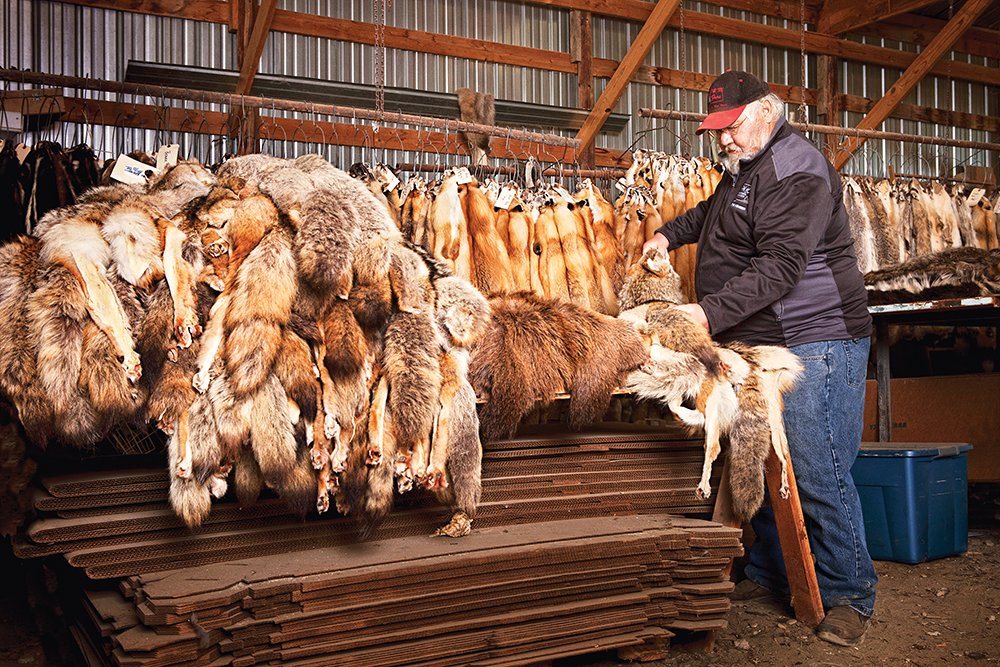
“There are all kinds of outlets for furs out there,” says Hughes. “Maybe the best outlet is right in your hometown, but it’s on a smaller volume, like a local gal who wants five or six red foxes. She’s willing to pay $75 or $80 for them because she’s going to make a few hats. Maybe it’s not a big order, but you can sell at a premium price. And if you get a lot of them, it turns into something big.”
Hughes has diversified his fur-buying business over the past three decades, often buying unskinned coyotes. These carcasses are called “in the round,” and he buys them for far less than he pays for finished skins. But they also require that Hughes or one of his employees spends hours removing hides from carcasses, and even more hours scraping fat and flesh before washing and pulling skins over forming boards to dry. The finished skins will be sold, but what makes in-the-round animals attractive to Hughes is that he can extract fluids from their bladder and glands to create scent lures, which he sells under the brand name J&M. That’s an important secondary market for Hughes.
State Fur Auctions
Coyote pelts dominate the Montana Trappers Association’s annual fur sale, but other articles—raccoon skins, beaver castor, and marten pelts—are piled high on rows of tables. Each trapper brings the fruits of his season-long labor to the check-in table, where every item is tagged by hand and made ready for fur buyers to inspect. This scene is repeated at dozens of state fur auctions held annually across the country.
Hughes must travel to these sales each year in order to achieve the volume his brokers expect. The actual transaction is curiously old-fashioned, with nary a computer bar code or digital camera in sight. Hughes inspects each lot while his partner follows along with a notebook, writing down details of each potential sale. Other buyers are doing the same. Hughes knows nearly every competitor in the room. “Of the five to 10 buyers at each sale, probably 90 percent of us have seen each other at every sale in the Western U.S.,” explains Hughes.
 https://www.outdoorlife.com/articles/hunting/2016/02/fur-trade-journey-trap-market/